Cursor
AI-native code editor that runs autonomous agents to build, test, and review code
FREEMIUM Verified JUL 3, 2026
6 tools ranked · last updated Jul 17, 2026 · how we picked
The best agentic AI IDE in 2026 is Cursor, whose $20/month Pro plan runs autonomous agents that write, test, and fix code end to end inside a VS Code-based editor. The best budget pick is ByteDance's Trae, with paid plans from $3/month, and Google Antigravity is free for individuals in public preview — the cheapest way to trial parallel coding agents. All six are ranked on agent depth, not autocomplete.
Prices last verified Jul 16, 2026 against official pricing pages.
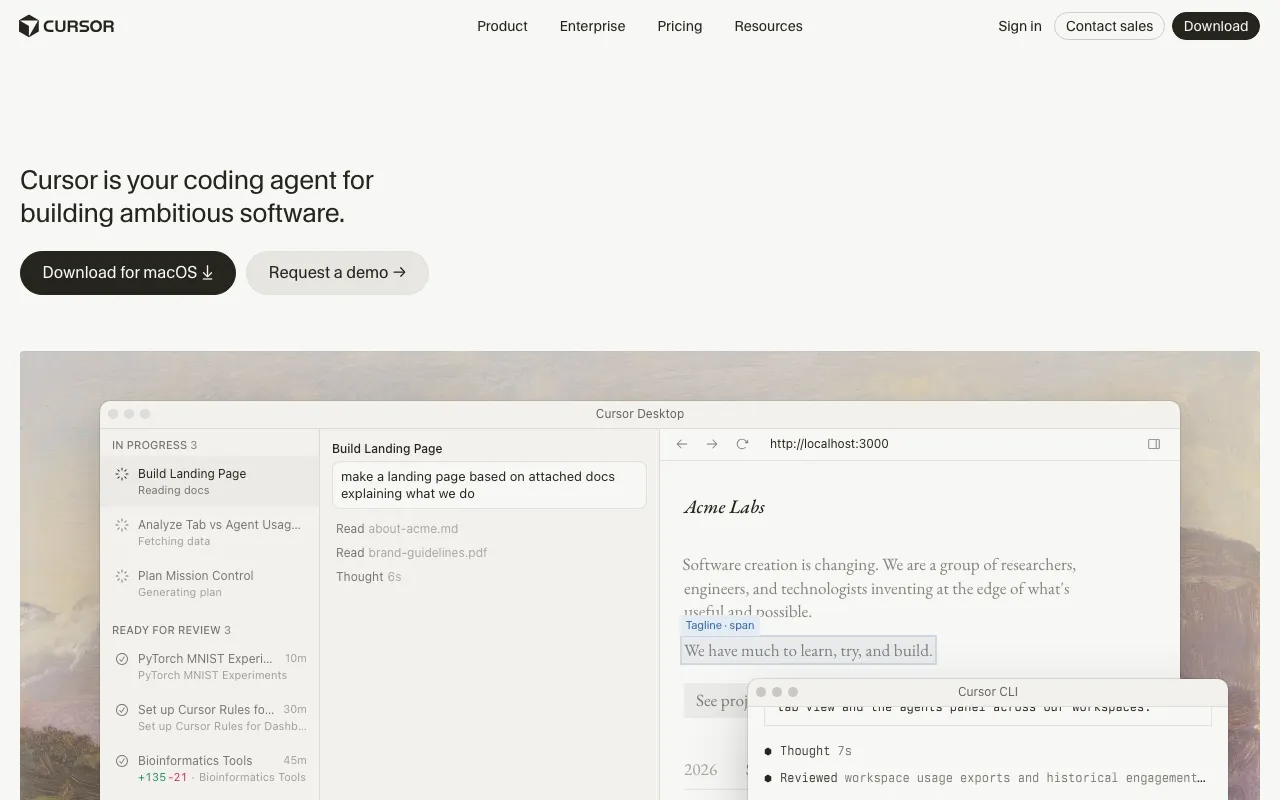
Cursor defined the category and still leads it: an AI-native editor built on VS Code — extensions, keybindings, and settings transfer directly — whose agents autonomously write, run, and test code end to end while you review diffs instead of typing every line. Pro is $20/month with a $20 credit pool spanning frontier models including Claude Sonnet, GPT-4o, and Gemini; Pro+ at $60/month and Ultra at $200/month serve genuinely heavy AI-native development, and the free Hobby tier includes a one-week Pro trial with no credit card. It ranks first on maturity: the agent workflow, model routing, and review tooling — including Bugbot for agentic code review on Teams — are the most polished here. The caveats: the Pro credit pool can run out mid-month on heavy agentic work, and autonomous multi-file edits still demand careful review, because subtle bugs arrive at machine speed.
Windsurf is the agentic IDE built by Codeium, acquired by Cognition in 2026 and now rebranding as Devin Desktop. Its Cascade engine is the reason it ranks this high: it plans multi-step tasks, reads project structure through Codemaps, runs terminal commands, and iterates on results in one directed session — a genuinely deeper plan-and-execute loop than most rivals. Pro is $15/month for 500 prompt credits, the lowest paid price among the mainstream agentic IDEs, and the free tier includes unlimited Tab autocomplete — rare in this category — plus proprietary SWE models that consume zero credits. The caveats: the rebrand is real product-identity churn (windsurf.com now redirects to devin.ai), which is why our catalog holds it at lower confidence than its rivals, and frontier-model sessions deplete Pro credits noticeably faster than the in-house models do.
Kiro is AWS’s answer to agentic coding chaos: before writing code, it turns your prompt into requirements, a design document, and sequenced tasks, then implements them with parallel agents — so larger projects get traceability as a byproduct instead of an archaeology exercise afterwards. Built on Code OSS, it imports VS Code settings, themes, and Open VSX plugins directly. The free tier includes 50 credits and Claude Sonnet 4.5 access with no credit card; Pro is $20/month for 1,000 credits, scaling to Power at $200/month for 10,000, with overage at $0.04 per credit and no daily rate limits. The caveats: the spec-first workflow adds genuine overhead — writing and reviewing requirements before coding is slower for small throwaway tasks — credits do not roll over, and having reached general availability only in May 2026, its plugin coverage and community are younger than the editors ranked above.
Qoder is Alibaba’s agentic IDE, and its differentiator is repository understanding: Repo Wiki builds a navigable knowledge layer over a codebase, and Quest mode runs long autonomous tasks — some sessions run for hours — making it the strongest pick here for working in large or unfamiliar repos. A free Community Edition plus a 2-week Pro trial means evaluation costs nothing; Pro is $20/month for 2,000 credits, matching Cursor’s mainstream price, with Pro+ at $60/month and Ultra at $200/month for heavy autonomous use. The caveats: monthly credits do not roll over and heavy Quest use can drain them mid-month; hours-long agent runs can drift and need careful diff inspection; and the corporate structure is oddly opaque — the product is widely reported as Alibaba’s while the site’s copyright names a Singapore entity — worth weighing before pointing it at proprietary code.
Trae is ByteDance’s VS Code fork, and on price nothing here touches it: the free tier includes 5,000 autocompletions a month plus limited access to SOLO — the autonomous mode that scaffolds full-stack projects from a plain-language prompt — and paid plans start at $3/month for Lite, with Pro at $10/month covering unlimited autocomplete and 10 concurrent cloud tasks. That is a working agentic IDE for a third of the mainstream $20 price point, on a familiar VS Code base with broad extension compatibility. The caveat is significant enough to be a ranking factor: ByteDance ownership carries widely reported privacy concerns, with coverage citing telemetry that continued after opt-out and no local-only mode, and the February 2026 shift to token-based usage billing makes true per-tier value hard to predict as “basic” and “bonus” usage deplete.
Google Antigravity is an agent-first development platform spanning a desktop app, a VS Code-based IDE, a CLI, and an SDK — and for individuals it costs $0 in public preview, with no credit card. It is not Gemini-only: Claude Sonnet and Opus and GPT-OSS-120B sit in the model picker as first-class options, and the Agent Manager orchestrates parallel multi-agent work better than a single-threaded chat pane. Paid quota folds into Google AI subscriptions from $19.99/month rather than a separate per-seat bill. It ranks last despite the price because the preview terms are volatile: the free quota has been cut hard since launch and weekly ceilings have moved without warning, Google killed its own Gemini CLI in June 2026 — so the platform-mortality risk is demonstrated, not hypothetical — and it remains beta software with no standalone price commitment.
We ranked on the depth and reliability of autonomous execution — planning, multi-file edits, running and iterating on code — then on repo-scale context, pricing honesty, and how much you can evaluate before paying. This list covers graphical IDEs only: terminal-based agents are a separate ranking, and Claude Code, which tops our terminal coding list, is a CLI rather than an IDE and is out of scope here. Pricing was verified against each vendor’s official pricing or docs pages between June 11 and July 16, 2026, and matches each tool’s full profile on this site. No tool paid or provided incentives to appear, and rankings cannot be bought.
AI-native code editor that runs autonomous agents to build, test, and review code
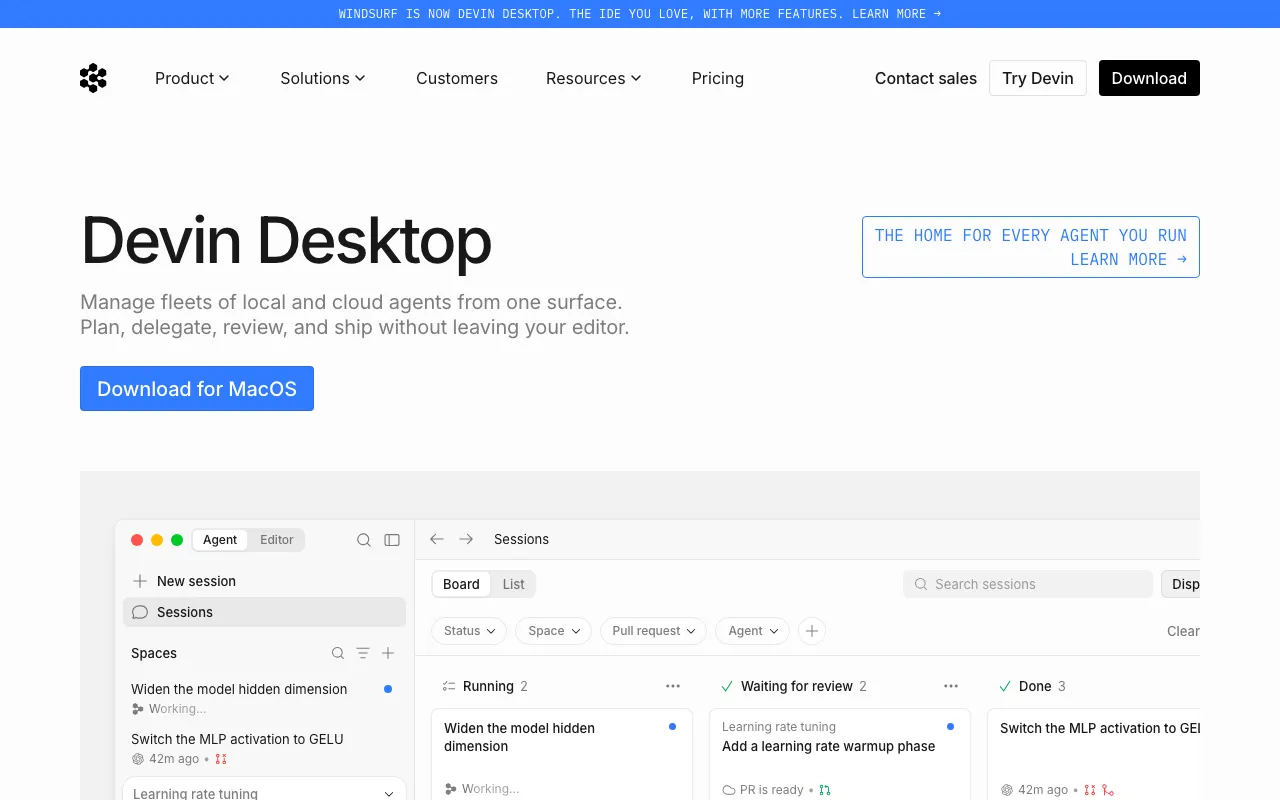
Agentic AI IDE with Cascade that writes, edits and runs code autonomously inside your editor
AWS's agentic, spec-driven AI IDE that turns prompts into requirements, designs, and sequenced tasks, then builds them with parallel agents
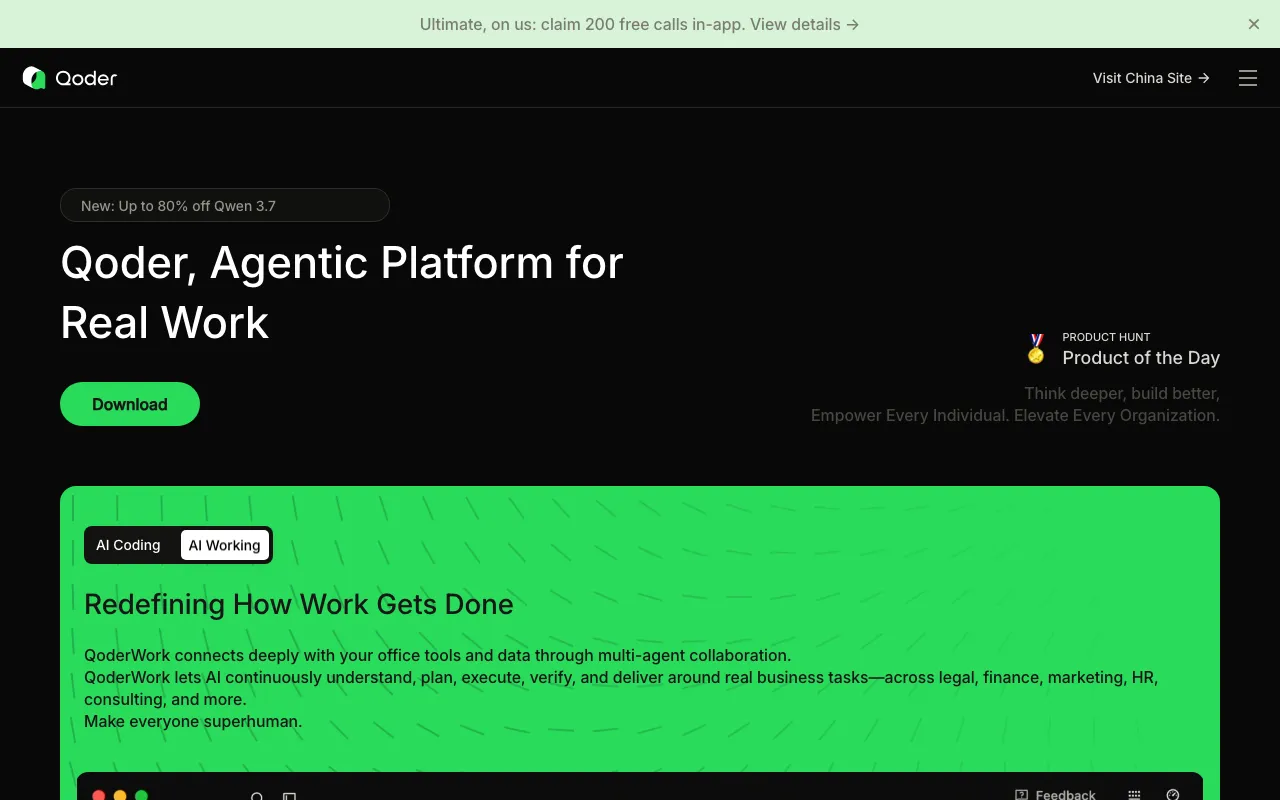
Alibaba's agentic coding IDE with Quest autonomous task mode and repo-wide context, billed on a monthly credit system
ByteDance's free, VS Code-based AI code editor with an autonomous SOLO mode that scaffolds and builds full-stack projects from a prompt
Google's agent-first development platform — desktop app, IDE, CLI, and SDK sharing one agent harness across Gemini, Claude, and GPT-OSS models
Every tool in this list has a full profile in our directory with pricing verified against its official pricing page on the date shown on its stamp. Ranking reflects verified pricing, free-tier generosity, platform coverage, and documented capabilities — not sponsorships. Nobody can pay to appear here. Read the full methodology.
Yes — 6 of the 6 tools here have a free tier: Cursor, Windsurf, Kiro, Qoder, Trae, Google Antigravity. Pricing verified Jul 17, 2026.
Trae has the lowest verified monthly starting price in this list at $3/mo, checked against its official pricing page on Jun 30, 2026.
1 of the 6 tools list an API: Google Antigravity.