Tabnine
Privacy-first AI coding assistant with air-gapped deployment and your choice of LLM
PAID Verified JUN 21, 2026
6 tools ranked · last updated Jul 18, 2026 · how we picked
The best AI coding tool for enterprise teams in 2026 is Tabnine at $39/user/month — the only one here that deploys fully air-gapped with a zero data-retention policy and SOC 2, ISO 27001 and GDPR compliance. Augment Code is the pick for very large repositories at $60/developer/month with SOC 2 Type II and on-premises deployment. This list ranks the 6 tools on evidenced deployment and governance controls rather than raw coding ability, so the order differs from our general coding roundup.
Prices last verified Jul 3, 2026 against official pricing pages.
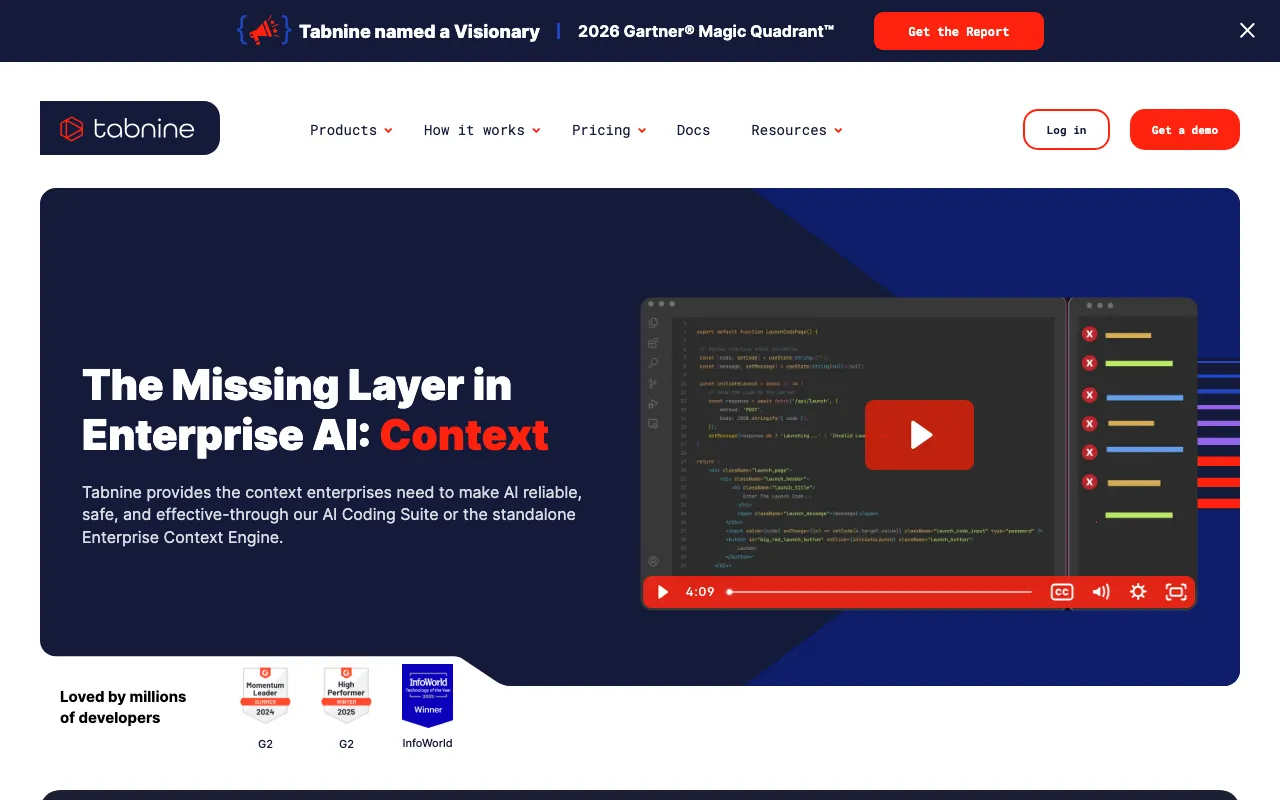
Tabnine is the only tool in this list that can be deployed fully air-gapped, and it is the reason it ranks first for an intent about data control rather than autocomplete quality. It offers SaaS, VPC, on-premises and air-gapped deployment, a stated zero data-retention policy, SOC 2, ISO 27001 and GDPR compliance, an Enterprise Context Engine with unlimited codebase connections, and centralised governance with audit logs. In 2026 it dropped its free and low-cost individual tiers and went enterprise-only: Code Assistant is $39/user/month and the Agentic Platform is $59/user/month, both billed annually. For finance, healthcare and defence teams whose code cannot leave the network, nothing else here clears the bar. The caveat is that there is no month-to-month option and no cheap individual tier, and LLM token usage bills separately at provider rates plus a 5% fee when using Tabnine-provided model access.
Augment Code is built around a context engine that indexes genuinely large, enterprise-scale repositories — the case where flat-file context tools stop being useful — and it is the best-evidenced large-repo indexer in this list. On the governance side it offers SOC 2 Type II and ISO 42001 controls, SSO with OIDC and SCIM, customer-managed encryption keys, SIEM integration, and deployment across managed cloud, customer cloud, VPC and on-premises. Pricing is credit-based with no permanent free tier: Indie is $20/month, Standard is $60/month per developer, Max is $200/month, and Business is $100/month for up to 50 seats with no per-seat charge. Two caveats: credits do not roll over, so heavy use forces top-ups at $15 per 24,000 credits and real cost exceeds the headline, and standalone code completions were sunset, narrowing the product toward agentic workflows.
Factory AI runs Droids — agents that triage issues, write and validate code, and ship releases across the delivery pipeline rather than assisting inside an editor. Its enterprise story is the most complete after Tabnine’s: SSO with SAML and SCIM provisioning, zero data retention on the Teams tier, audit logging, full admin controls, and on-premises or air-gapped deployment across AWS, Azure and GCP. It is model-independent and runs from a desktop app, CLI and SDK. Pro is $20/month, Plus is $100/month and Max is $200/month with roughly 200 million tokens; Teams and Enterprise are quote-only. It suits an engineering org automating real delivery work, not individual developers. Two caveats: token-metered usage makes monthly spend genuinely hard to predict on Plus and Max, and SOC 2 status is not stated anywhere in Factory’s own documentation.
Warp is a native terminal with an AI agent built in, and it is the surprise entry on an enterprise list because its Business tier at $50/user/month enforces zero data retention team-wide, adds SAML single sign-on, and its Enterprise tier supports bring-your-own-LLM and self-hosting cloud agents on your own infrastructure. Among the tools here it has the clearest published seat price attached to a real data-control guarantee — most rivals put both behind a sales call. The terminal itself is free with a limited monthly AI-credit allowance; Build is $20/month for 1,500 credits and Max is $200/month for 18,000. The caveats are about cost predictability rather than security: credits are an abstract unit that make per-task cost hard to forecast in advance, and the free tier’s AI drops to roughly 75 credits a month after the first two months.
Claude Code is our highest-ranked AI coding tool overall, and on any list ranked by coding capability it leads. It ranks fifth here because this list ranks deployment controls, and Anthropic’s evidenced enterprise story is governance rather than data residency: SSO, SCIM provisioning, fine-grained role-based access, audit logs, IP allowlisting, a HIPAA-ready option, and no model training on your content by default on Team and Enterprise plans. Team Standard is $25/seat/month and Team Premium is $125/seat/month — the cheapest seat price in this list — with Pro at $20/month for individuals. Choose it when your requirement is administrative control and a data-use commitment rather than running the tool inside your own perimeter. The caveat is exactly that gap: there is no on-premises, self-hosted or air-gapped option, and no repository index — Claude works from a 200,000-token context window instead.
Cursor is the tool most engineering organisations actually standardise on, and it ranks last here not because it is the weakest but because it evidences the fewest deployment controls of the six. What it does have is real and coding-specific: SAML and OIDC single sign-on, SCIM seat management, audit logs, service accounts, an AI code tracking API, and repository, model and MCP access controls that let you decide which models may see which repos. Teams is $40/user/month; Pro is $20/month for individuals and Ultra is $200/month. Its semantic codebase search works across large monorepos, and being a VS Code fork means existing extensions and keybindings survive a rollout. Two caveats: its documentation is silent on SOC 2, zero data retention and on-premises deployment, and $40/user/month adds up quickly across a large org.
We ranked on evidenced enterprise controls rather than coding ability: air-gapped, on-premises or VPC deployment, zero data retention, named compliance certifications, SSO with SCIM, audit logging, and whether a per-seat price is published rather than hidden behind sales. That axis deliberately inverts our general coding roundup — tools that lead there on capability, including GitHub Copilot, JetBrains AI, Amp and the browser app-builders, rank low or not at all here because their documentation is silent on SOC 2, retention and deployment. It is also why Claude ranks fifth despite being our top overall coding pick: Anthropic evidences strong administrative governance but no self-hosted or air-gapped path. Two exclusions worth naming: Windsurf has genuine controls at a published $60/seat but is mid-rebrand toward Devin Desktop, and Devin’s own documentation concedes output quality is uneven enough that careful review is mandatory. Where a control is not stated in a vendor’s own materials, we treated it as absent rather than assumed. Pricing was verified against each vendor’s official pricing page between June 18 and July 3, 2026. No tool paid to appear, and placements cannot be bought.
Privacy-first AI coding assistant with air-gapped deployment and your choice of LLM
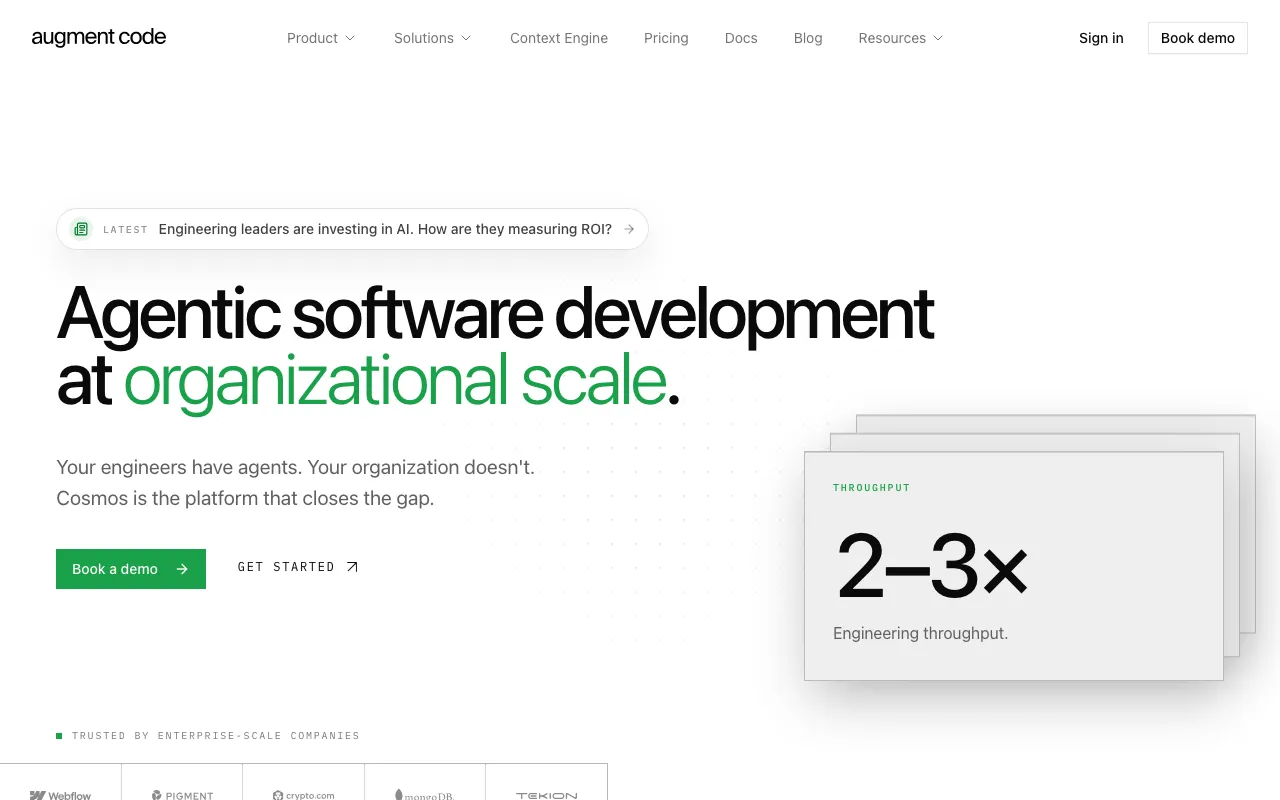
Agentic coding platform with a context engine that indexes large codebases, plus expert agents for review, testing, and PR authoring
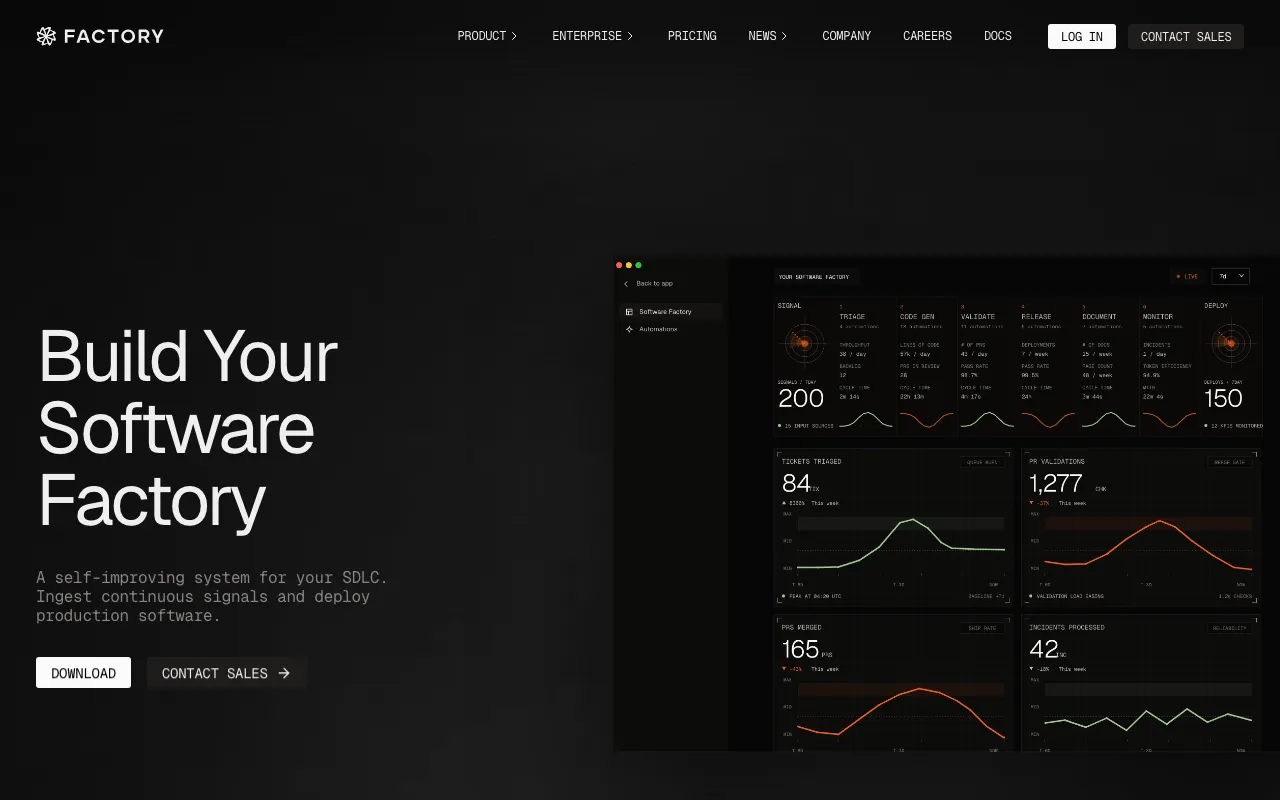
Agentic software-development platform whose Droids autonomously triage, code, validate, and ship software across the SDLC from the desktop, CLI, or cloud
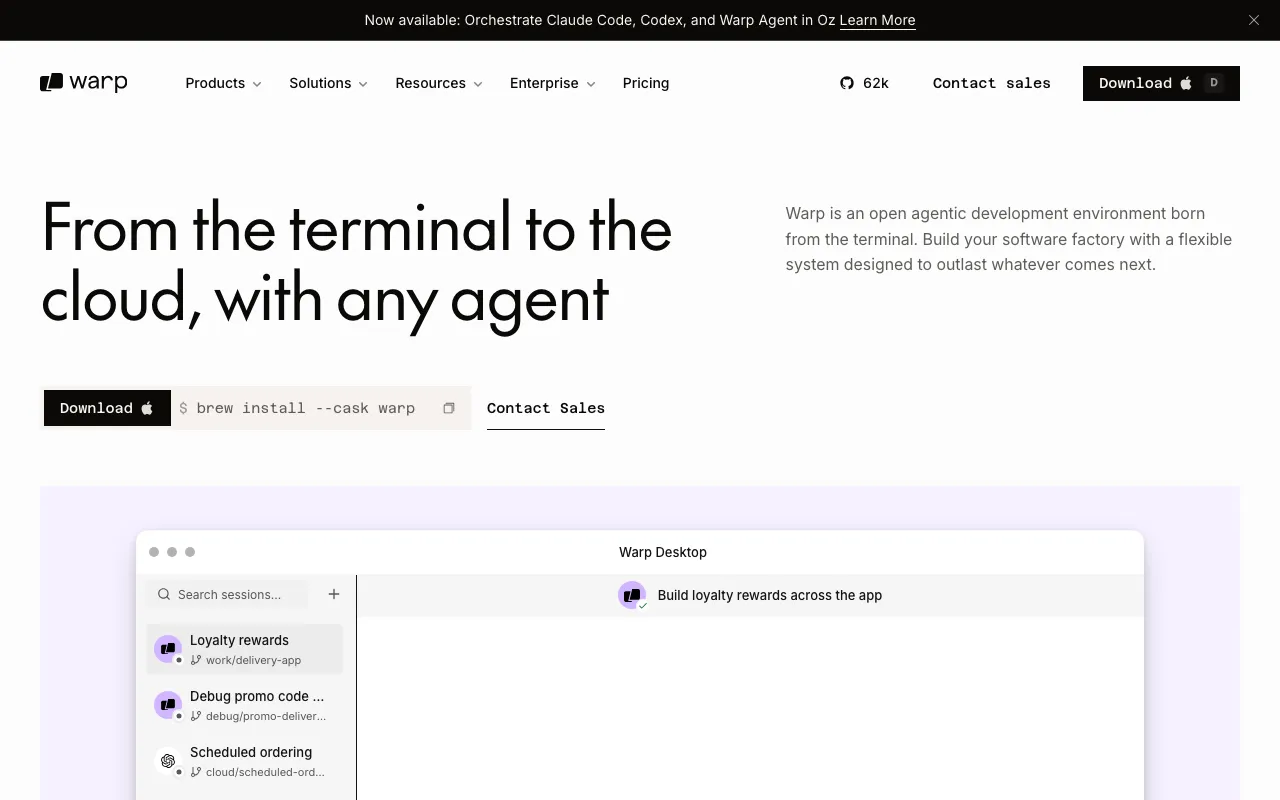
AI-powered terminal and agentic development environment with autocomplete and cloud agents

Anthropic's AI assistant built for long-context analysis, coding, and safe reasoning
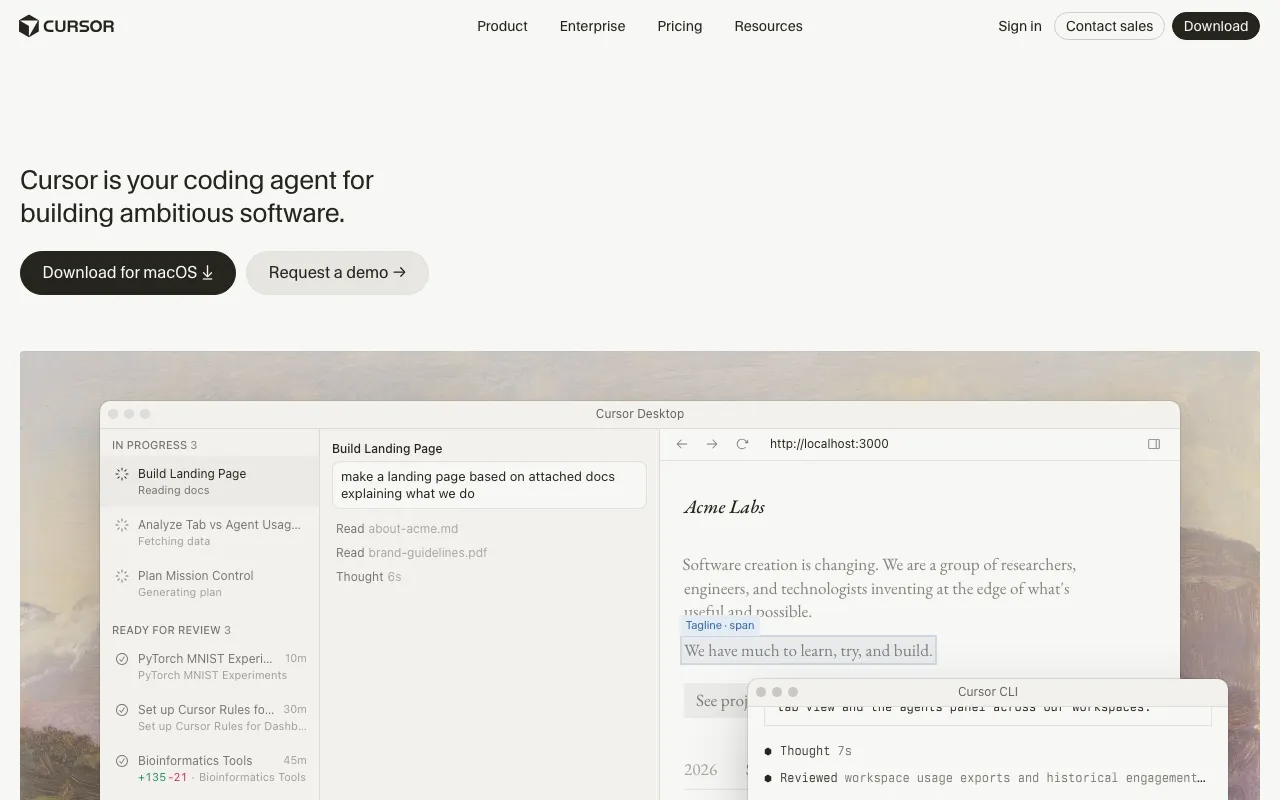
AI-native code editor that runs autonomous agents to build, test, and review code
Every tool in this list has a full profile in our directory with pricing verified against its official pricing page on the date shown on its stamp. Ranking reflects verified pricing, free-tier generosity, platform coverage, and documented capabilities — not sponsorships. Nobody can pay to appear here. Read the full methodology.
Yes — 3 of the 6 tools here have a free tier: Warp, Claude, Cursor. Pricing verified Jul 18, 2026.
Augment Code has the lowest verified monthly starting price in this list at $20/mo, checked against its official pricing page on Jun 30, 2026.
3 of the 6 tools list an API: Augment Code, Factory AI, Claude.