
Claude
Anthropic's AI assistant built for long-context analysis, coding, and safe reasoning
FREEMIUM Verified JUL 3, 2026
5 tools ranked · last updated Jul 12, 2026 · how we picked
The best AI terminal coding tool in 2026 is Claude Code, Anthropic's command-line agent that plans and executes multi-file changes from the terminal, included with Claude Pro at $20/month. The best free option is Aider, an open-source terminal pair programmer you run with your own API key, while OpenAI Codex is the pick if you already pay for ChatGPT, starting at $8/month. All 5 tools live in the command line, not an IDE.
Prices last verified Jul 6, 2026 against official pricing pages.
Claude Code is the most capable command-line coding agent available in 2026. It reads, edits, and runs files across an entire multi-file project from the terminal, planning and executing multi-step changes rather than completing single lines, and it runs on Anthropic’s frontier models (Opus, Sonnet, Haiku) with a large context window that lets it hold a whole codebase in view. It is included with the Claude Pro subscription at $20/month and scales to Max at $100/month for heavy continuous use. The honest caveat: it lives in the terminal with no graphical editor, so developers who want inline diffs and a GUI will prefer an IDE like Cursor, and sustained Opus-level agentic sessions deplete usage quota faster than lighter models — capacity is expressed as flexible limits rather than a fixed message count, which makes it hard to predict. For autonomous, whole-project work from the command line, it is the benchmark.
OpenAI Codex is a full software-engineering agent that ships as an open-source Rust CLI, an IDE extension, and parallel cloud tasks — you can kick off work in the terminal or hand off long jobs to cloud sandboxes that open pull requests for review. Its biggest advantage is bundling: it is included in ChatGPT plans, so if you already pay for ChatGPT you get it without a separate subscription, and standalone access starts at $8/month for Go, with Plus at $20/month. It is genuinely strong at multi-file tasks and PR-style workflows. The honest caveat: it is locked to OpenAI models only, so you cannot route to Claude or Gemini when they would do better, and its usage limits are published as opaque wide ranges that make it hard to know when you will hit a wall. For ChatGPT subscribers, it is the most cost-effective terminal agent here.
Amp, from Sourcegraph, is a terminal-first agentic coding tool that runs autonomous agents across the CLI, editors, and the web, driving frontier models (including Claude Opus) with extras like the Oracle reasoning mode and parallel subagents. Its billing model is the differentiator: usage-based with zero markup, so you pay providers’ real token rates rather than a fixed monthly fee — attractive for developers whose usage is spiky or who want frontier models without a subscription commitment. There is an Amp Free tier, and Enterprise is a $1,000 one-time option. The honest caveat: usage-based cost is inherently unpredictable, so a heavy week can get expensive, and Amp Free is unreliable — it is capacity-gated and being trimmed, so you cannot depend on it. For pay-as-you-go access to a powerful multi-surface agent, Amp is the pick.
Aider is the open-source terminal pair programmer for developers who want maximum control and model flexibility. It works directly in your git repo — making commits as it edits so every change is tracked and reversible — and it is fully model-agnostic: you bring your own API key and point it at whatever LLM you like, from frontier models to local ones. The software itself is free. The honest caveat is that “free” is misleading in practice: you pay the real API costs of whatever model you drive it with, and those add up quickly on frontier models, so a busy day of agentic edits can cost more than a flat subscription. Output quality also depends entirely on the model you supply — Aider is a thin, excellent harness, not the intelligence itself. For terminal-comfortable developers who value git-native control and model choice, it is the best open-source option.
Warp reframes the terminal itself as an AI environment: it is a modern, AI-powered command-line app with smart autocomplete, an agent mode, and cloud agents, so the assistance is woven into where you already run commands rather than bolted on. It shines for command generation, debugging shell errors, and DevOps and ops work, and it has a free tier with Build at $20/month and Max at $200/month. The honest caveat: Warp is oriented more toward command generation and terminal workflows than deep, multi-file agentic coding, so as a pure coding agent it trails the tools above — and its credits are an abstract unit, which makes the real cost per task hard to predict. If you live in the terminal and want AI woven through everyday command-line work, Warp is the best environment; for heavy code-writing, pair it with one of the agents above.
We ranked these five command-line tools by agentic coding capability, model flexibility, verified-price value, and predictability of cost — not by popularity, and no tool paid or was incentivized to appear. This list covers tools that live in the terminal; installable AI editors like Cursor and Zed are in our separate AI code editors ranking. Per our editorial stance, Claude Code ranks first on the merits as the most capable terminal agent; OpenAI Codex wins on bundled value for ChatGPT users; Amp is the usage-based frontier pick; Aider is the best free, model-agnostic option; and Warp is the best agentic terminal for everyday command-line work. Pricing was verified between June 22 and July 6 2026 against each product’s official pricing page.
Anthropic's AI assistant built for long-context analysis, coding, and safe reasoning
OpenAI's software-engineering agent — open-source CLI, IDE extension, and cloud tasks, bundled with every ChatGPT plan
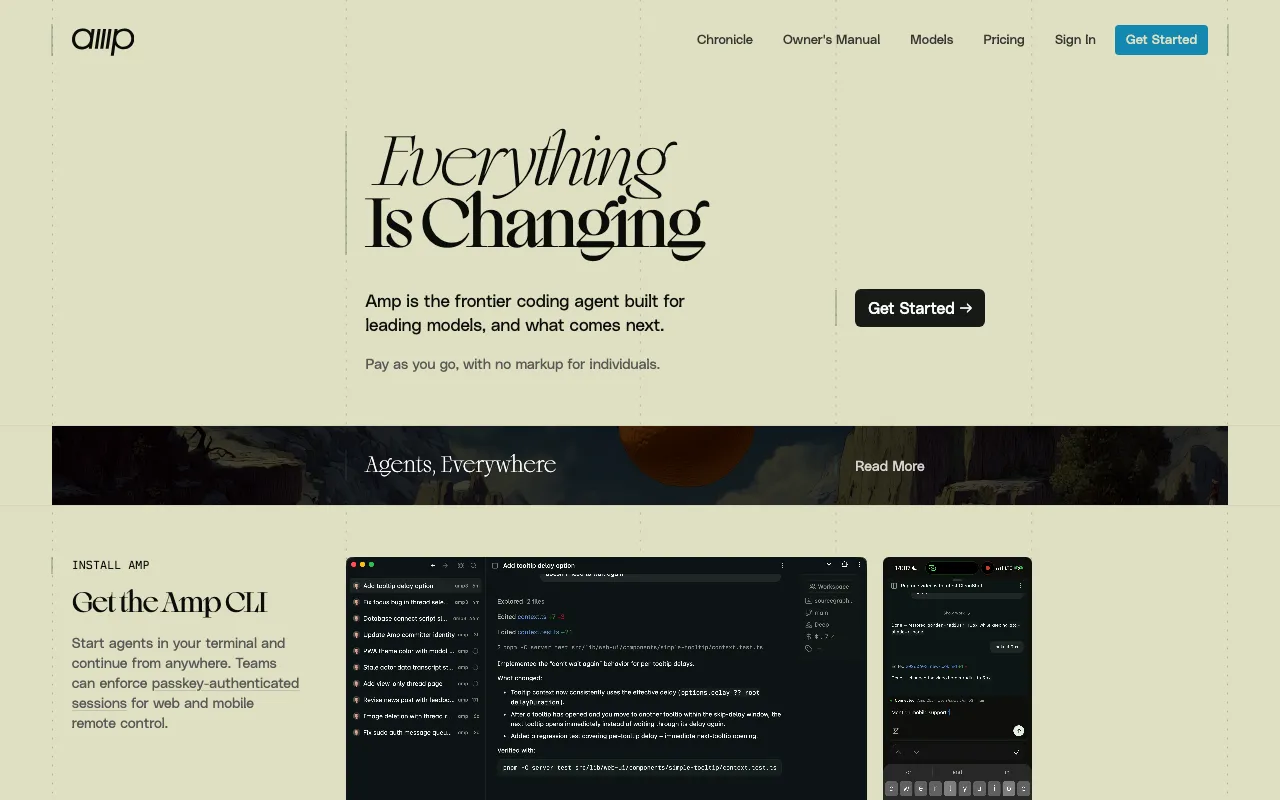
Sourcegraph's agentic coding tool — autonomous agents across CLI, editors, and web with zero-markup usage billing
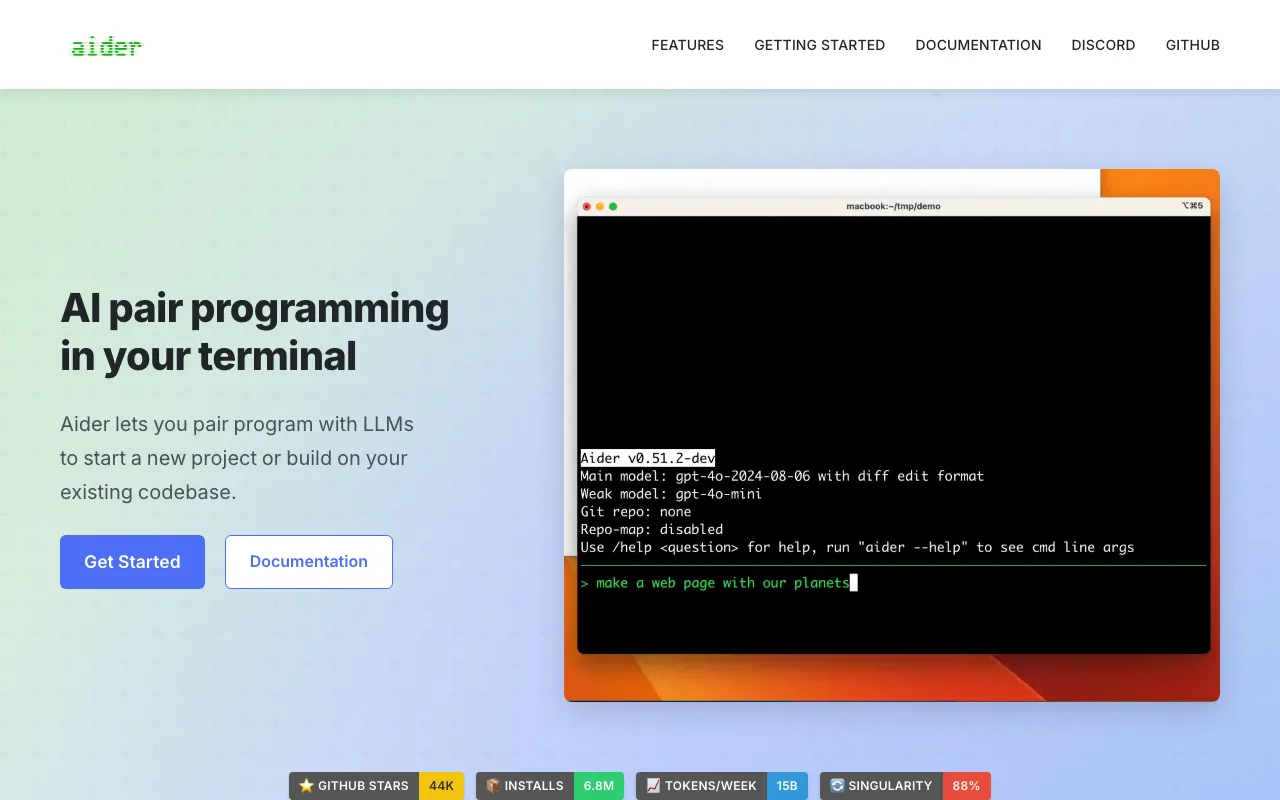
Open-source AI pair programming in your terminal — bring your own LLM key and edit your git repo
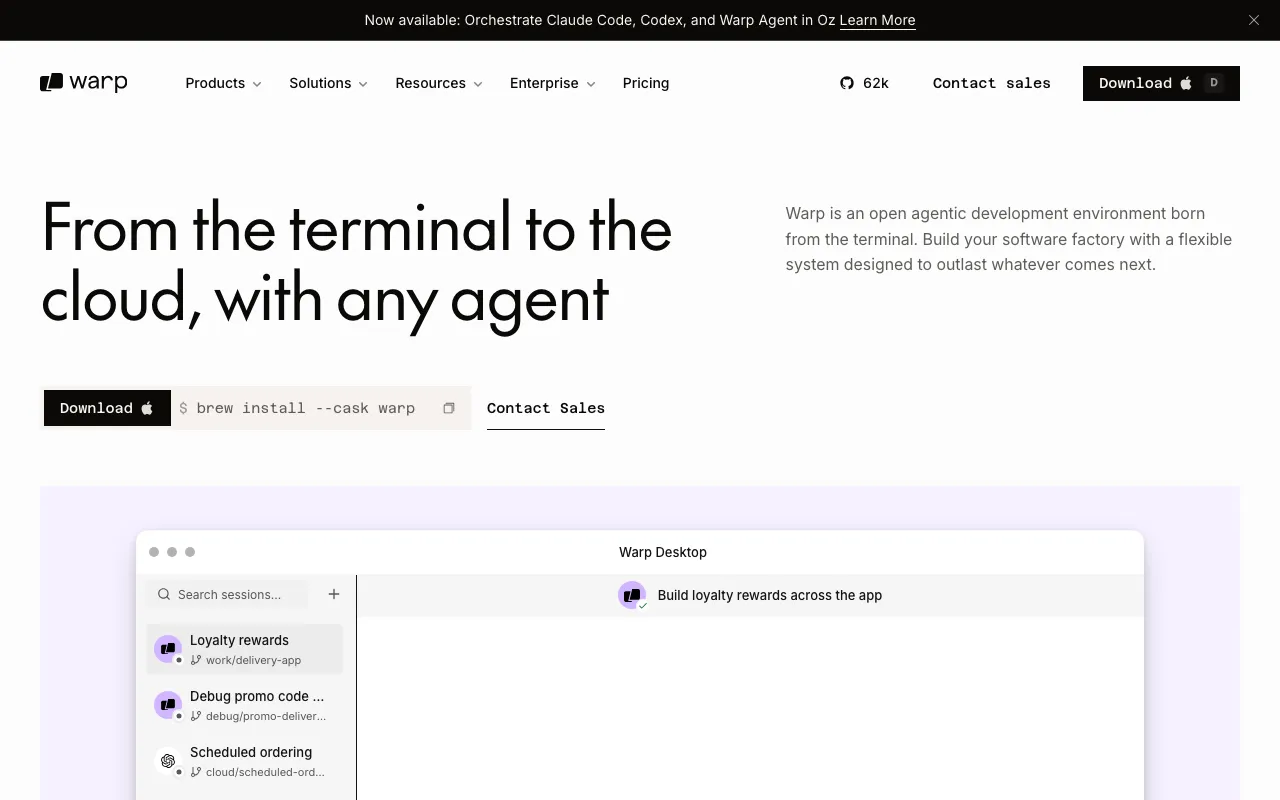
AI-powered terminal and agentic development environment with autocomplete and cloud agents
Every tool in this list has a full profile in our directory with pricing verified against its official pricing page on the date shown on its stamp. Ranking reflects verified pricing, free-tier generosity, platform coverage, and documented capabilities — not sponsorships. Nobody can pay to appear here. Read the full methodology.
Yes — 5 of the 5 tools here have a free tier: Claude, OpenAI Codex, Amp, Aider, Warp. Pricing verified Jul 12, 2026.
OpenAI Codex has the lowest verified monthly starting price in this list at $8/mo, checked against its official pricing page on Jul 6, 2026.
3 of the 5 tools list an API: Claude, OpenAI Codex, Amp.