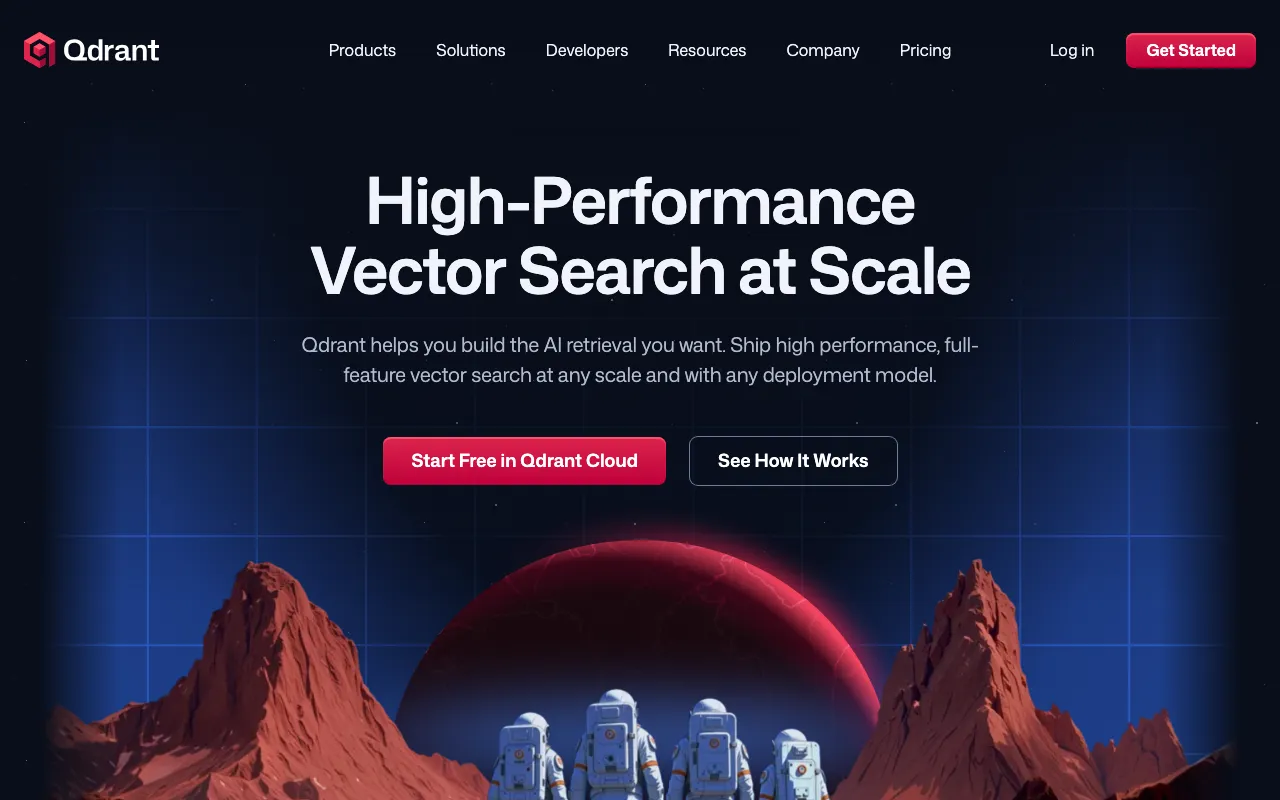
Qdrant
Open-source vector database in Rust for RAG, agent memory, and semantic search — self-host free or run on Qdrant Cloud
OPEN-SOURCE Verified JUL 20, 2026
4 tools ranked · last updated Jul 23, 2026 · how we picked
The best AI vector database in 2026 is Qdrant, a free, open-source (Apache-2.0) engine you can self-host with no vector cap or run on a free-forever managed cloud tier. Weaviate is the best open-core cloud option with a 100k-object free tier, and Pinecone is the most mature fully-managed choice from $20/month. Three of these four are open-source, and all four offer a genuinely usable free tier for building RAG and semantic search.
Prices last verified Jul 23, 2026 against official pricing pages.
Qdrant is a vector database written in Rust and the best all-round choice in 2026 because it pairs a genuinely unrestricted free engine with a clean managed exit. The full product is Apache-2.0 with no branding clause, so you can self-host with no vector cap, and it also ships a free-forever managed cloud tier — hybrid search, quantization, and sharding are all included at no cost. Paid managed clusters are usage-priced beyond the free allotment. It fits teams building RAG, agent memory, or semantic search that want production features without a licence tax or a hard lock-in to one vendor’s cloud. The honest caveat is that Qdrant Cloud publishes no public rate card, so estimating the bill for a real production cluster means using the pricing calculator or talking to sales rather than reading a table.
Weaviate is a BSD-3 open-core vector database that stands out for building embeddings in — its vectorizer modules can generate and store vectors natively, and hybrid (keyword + vector) search is a first-class feature. Self-hosting has no object cap, and its managed cloud starts at $0 with a free tier covering around 100,000 objects before pay-as-you-go pricing kicks in. That makes it a strong pick for teams that want a serverless-style managed retrieval layer but still value an open licence for on-prem deployment. The caveat is that Weaviate Cloud meters on vector dimensions, storage, and backups rather than a flat per-object plan, so costs are harder to forecast up front than Pinecone’s tiered pricing — you need to model your dimensionality and retention before committing.
Chroma is the fastest way to add a vector store to a project. It is Apache-2.0, free and unmetered when self-hosted, and its API is deliberately tiny — roughly four functions to create a collection, add documents, and query — which makes it the go-to for local development and quick RAG prototypes before you scale. Chroma Cloud is priced at $0 plus usage and seeds new accounts with $5 in credits, so you can move a prototype to a managed backend without a contract. It suits solo developers and small teams who want to embed retrieval into an app with minimal ceremony. The caveat is maturity: Chroma Cloud only launched in August 2025, so the managed service is comparatively young next to Pinecone’s multi-year production track record, and heavy-scale operational guarantees are still catching up.
Pinecone is the most mature fully-managed vector database in 2026, serving over 9,000 customers and billions of vectors with a published 99.95% uptime SLA. There is nothing to run: you get a serverless endpoint, automatic scaling, and metadata filtering out of the box, with a free Starter tier for small workloads and Standard pricing from $20/month. It is the safest choice for teams that want retrieval to be someone else’s operational problem and are happy to pay for that. The honest caveat is that Pinecone is proprietary with no open-source self-hosting path — even its bring-your-own-cloud option runs Pinecone’s own stack — so you are committing to the vendor, which is exactly the trade-off Qdrant, Weaviate, and Chroma let you avoid.
We ranked these four on the axis that matters for a vector database specifically — storage and retrieval — weighing free-tier generosity, licence openness, managed-service maturity, and genuine value rather than brand recognition. Qdrant leads because it delivers full capability in a free, Apache-2.0 engine with the most generous free footprint and a credible no-lock-in path; Pinecone ranks fourth here despite being the most polished managed option precisely because it is proprietary. This list ranks pure vector stores, not RAG orchestration frameworks — for those, see our RAG tools guide. Prices were verified in July 2026 against each product’s official pricing; no tool paid or was paid to appear.
Open-source vector database in Rust for RAG, agent memory, and semantic search — self-host free or run on Qdrant Cloud

Open-source vector database for AI-native search, RAG, and semantic retrieval — self-host free or run it managed on Weaviate Cloud
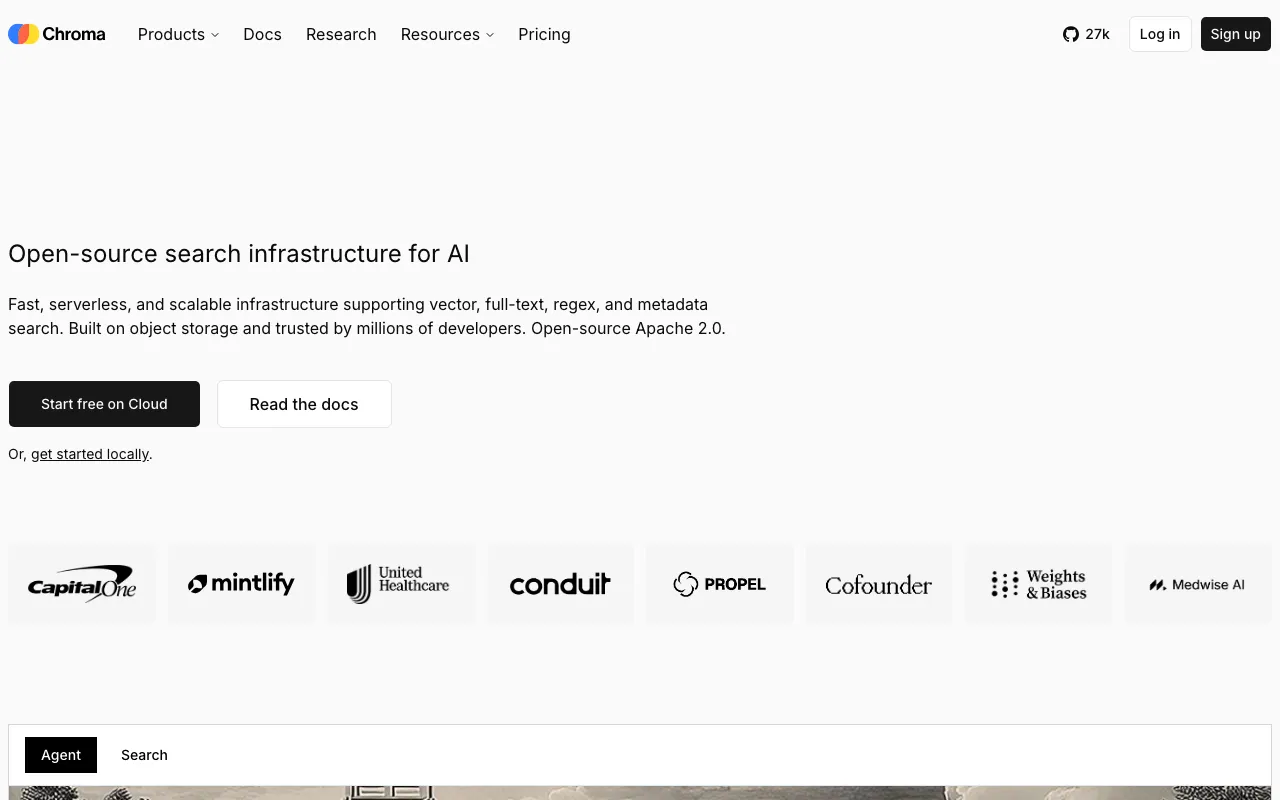
Open-source Apache-2.0 vector database for building RAG and semantic search into LLM apps, with a serverless usage-based Chroma Cloud
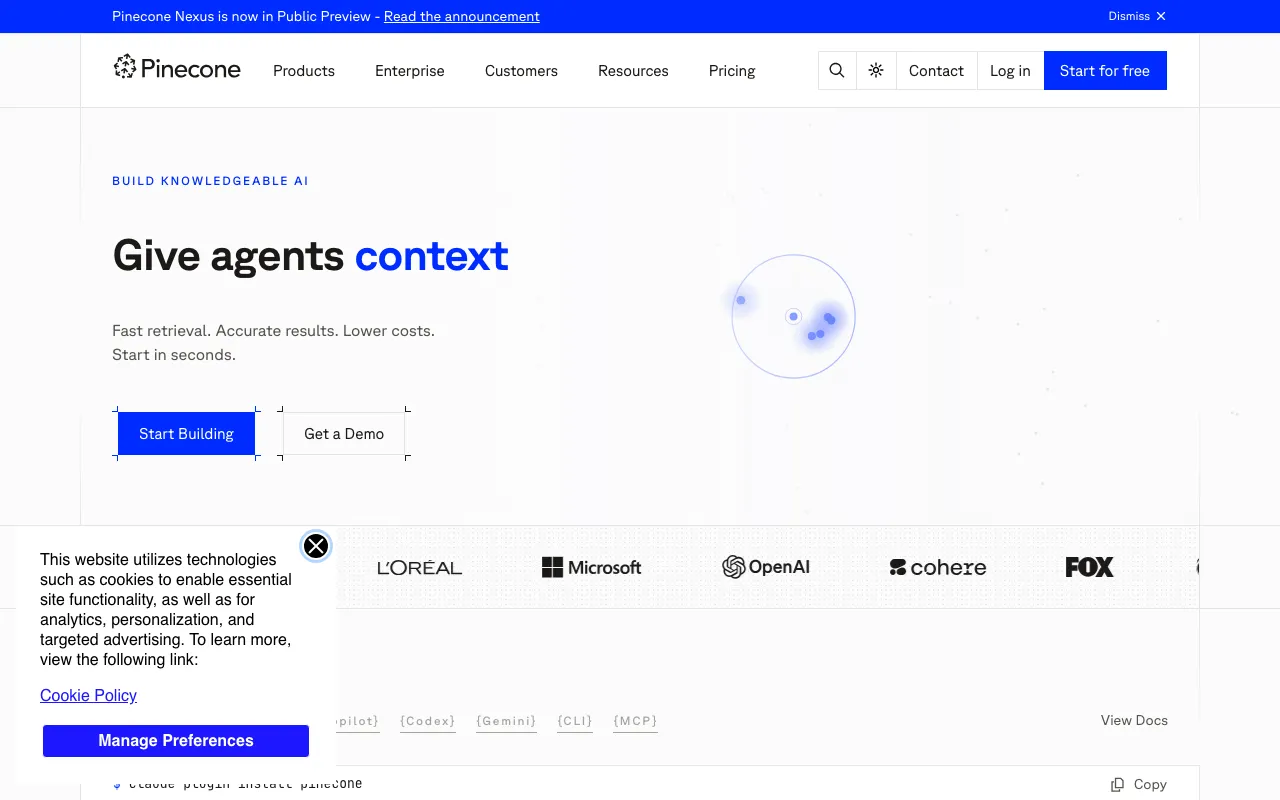
Managed serverless vector database for semantic search, RAG, and recommendation systems
Every tool in this list has a full profile in our directory with pricing verified against its official pricing page on the date shown on its stamp. Ranking reflects verified pricing, free-tier generosity, platform coverage, and documented capabilities — not sponsorships. Nobody can pay to appear here. Read the full methodology.
Yes — 4 of the 4 tools here have a free tier: Qdrant, Weaviate, Chroma, Pinecone. Pricing verified Jul 23, 2026.
Pinecone has the lowest verified monthly starting price in this list at $20/mo, checked against its official pricing page on Jul 12, 2026.
4 of the 4 tools list an API: Qdrant, Weaviate, Chroma, Pinecone.