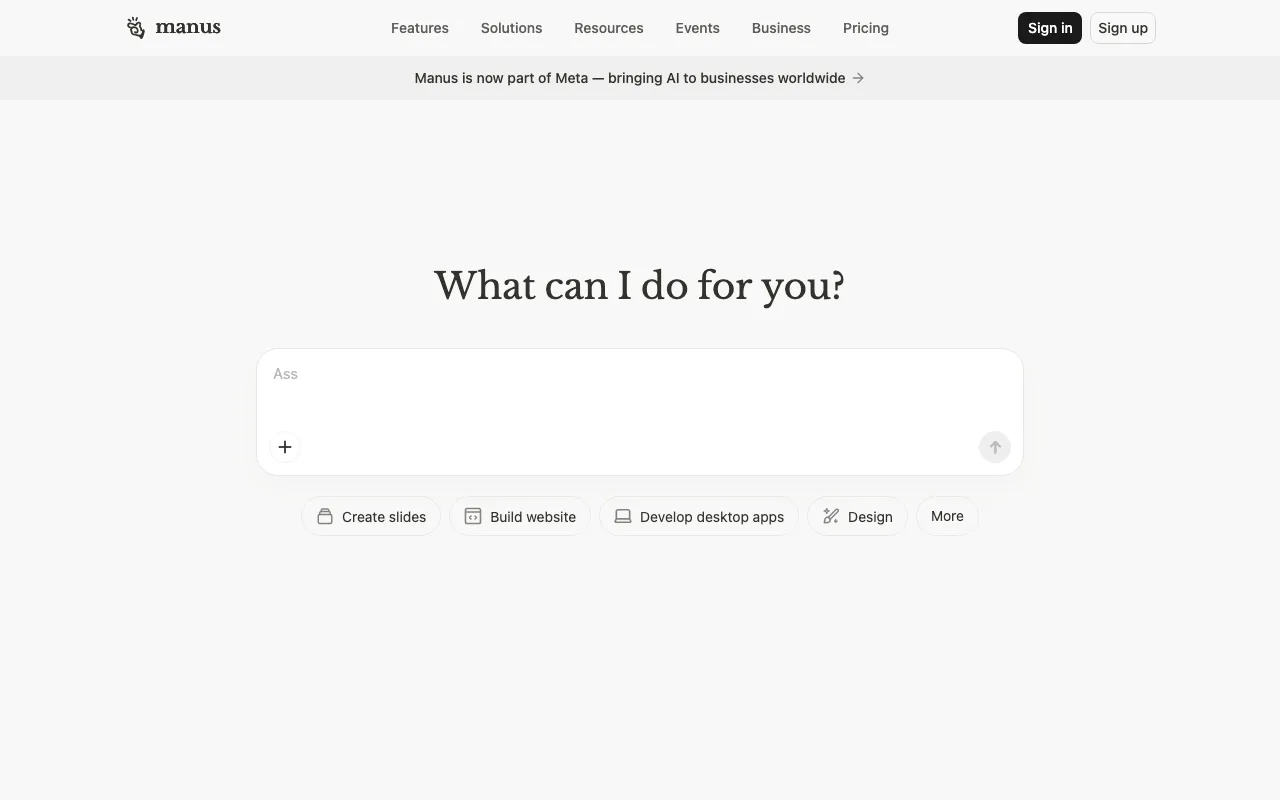
Manus
Autonomous general AI agent that plans and executes multi-step tasks end-to-end in the cloud
FREEMIUM Verified JUN 20, 2026
5 tools ranked · last updated Jul 11, 2026 · how we picked
The best autonomous AI agent in 2026 is Manus — hand it one goal and it executes every step to a finished result, with paid plans starting at $20/month for 4,000 credits. The best free and open-source pick is Skyvern, a vision-based browser agent that's free to self-host or $29/month for its managed Hobby cloud tier, followed here by Genspark's all-in-one super agent, Browser Use's open-source automation library, and Browserbase's cloud browser infrastructure.
Prices last verified Jul 10, 2026 against official pricing pages.
Manus is a general-purpose autonomous AI agent: give it a goal and it plans the steps, operates a built-in browser, and produces a finished deliverable — a report, a slide deck, a small app — without needing supervision on every turn. The free tier gives 300 daily refresh credits plus a one-time 1,000-credit starter pack, capped at 1 concurrent task; Pro plans start at $20/month for 4,000 monthly credits, rising to $40/month for 8,000 and $200/month for 40,000, all with up to 20 concurrent tasks. It’s built for people who want to hand off an entire multi-step job — research, monitoring, deck-building — rather than co-write it prompt by prompt. The honest caveat: credits don’t roll over, so unused monthly or daily allowances are simply lost, and a complex task can burn through a tier’s allowance faster than expected.
Skyvern is a Y Combinator-backed, open-source AI agent (AGPL-3.0, 22,000+ GitHub stars) that automates browser workflows from a plain-language description, using vision language models instead of brittle DOM selectors so it keeps working through layout changes. It natively handles logins, 2FA, and CAPTCHAs, extracts results to CSV or JSON, and can be shown a task once via a record-once mode and repeat it afterward. The open-source version is free to self-host with your own LLM keys; the managed cloud service adds a free tier, Hobby at $29/month (about 30,000 credits, 10 concurrent runs), and Pro at $149/month (about 150,000 credits, 25 concurrent runs), plus a REST API and SDKs. It suits teams automating real web tasks that break traditional scrapers. The caveat: vision-based navigation can be non-deterministic and slower than a scripted bot on complex, heavily defended sites, and per-action credits add up fast on long workflows.
Genspark is an all-in-one AI “Super Agent” that orchestrates more than 80 integrated tools and multiple frontier models to run research, build slide decks and data sheets, browse the live web, and — distinctively — place real outbound phone calls to book appointments or request quotes. The free plan gives 100 credits a day with no credit card required; Plus is $24.99/month (or $19.99/month billed annually) for 10,000 monthly credits, and Pro is $249.99/month for 125,000 credits. It fits solo operators and small teams who’d otherwise juggle several separate AI tools. The honest caveat: there’s a steep, undocumented jump from Plus at $24.99/month straight to Pro at $249.99/month with no middle tier, and Genspark has no public developer API, so it can’t be wired into a programmatic workflow the way true infrastructure can.
Browser Use is an open-source Python library that gives an AI agent direct control of a real browser — clicking, typing, and pulling structured data from any site via natural-language tasks — and it’s model-agnostic, working with Claude and other frontier LLMs. The core library is free and self-hosted; Browser Use Cloud adds managed stealth browsers with a free tier (3 concurrent sessions), Dev at $29/month (25 concurrent sessions), and Business at $299/month (200 sessions), plus usage billed at $0.02 per browser-hour. It’s built for developers assembling their own web-automation agents, not end users who want to type a task and walk away. The caveat: Cloud costs stack — that $0.02/browser-hour and $5/GB of proxy bandwidth sit on top of the plan fee, and self-hosting the library means owning your own proxy and anti-detection infrastructure.
Browserbase is cloud infrastructure that runs headless Chrome sessions over an API for AI agents to drive, plus Stagehand, the company’s open-source browser-automation framework, and it’s compatible with Playwright, Puppeteer, and Selenium. Sessions come with a live view, replays, and unified logs for debugging. The Free plan gives 1 browser hour and 3 concurrent browsers; Developer is $20/month for 100 browser hours (then $0.12/browser-hour), and Startup is $99/month for 500 hours (then $0.10/browser-hour) with 100 concurrent browsers, with a custom Scale tier of 250+ concurrent browsers above that. It’s the pick for teams that have outgrown running their own browser fleet and would rather pay per browser-hour than operate one themselves. The honest caveat, in Browserbase’s own words: it’s infrastructure, not a finished agent — you still have to build the automation logic and supply the LLM yourself.
This list ranks general-purpose “give it a task, it executes end-to-end” agents against browser-automation infrastructure that developers build agents on top of — a real distinction worth being honest about. Manus and Genspark are agents you hand a goal to directly; Skyvern is an autonomous agent scoped to browser workflows, with a genuinely free self-hosted option; Browser Use and Browserbase are developer tools that supply the browser and the plumbing but expect you to write the automation logic yourself. We ranked by autonomy (does it act on a multi-step goal without step-by-step prompting), verified-pricing value (real free or open-source tiers, predictable scaling), and reliability signals such as GitHub adoption and the limits each vendor documents in its own cons list. Pricing verified on 2026-07-11; no tool paid to appear.
Autonomous general AI agent that plans and executes multi-step tasks end-to-end in the cloud
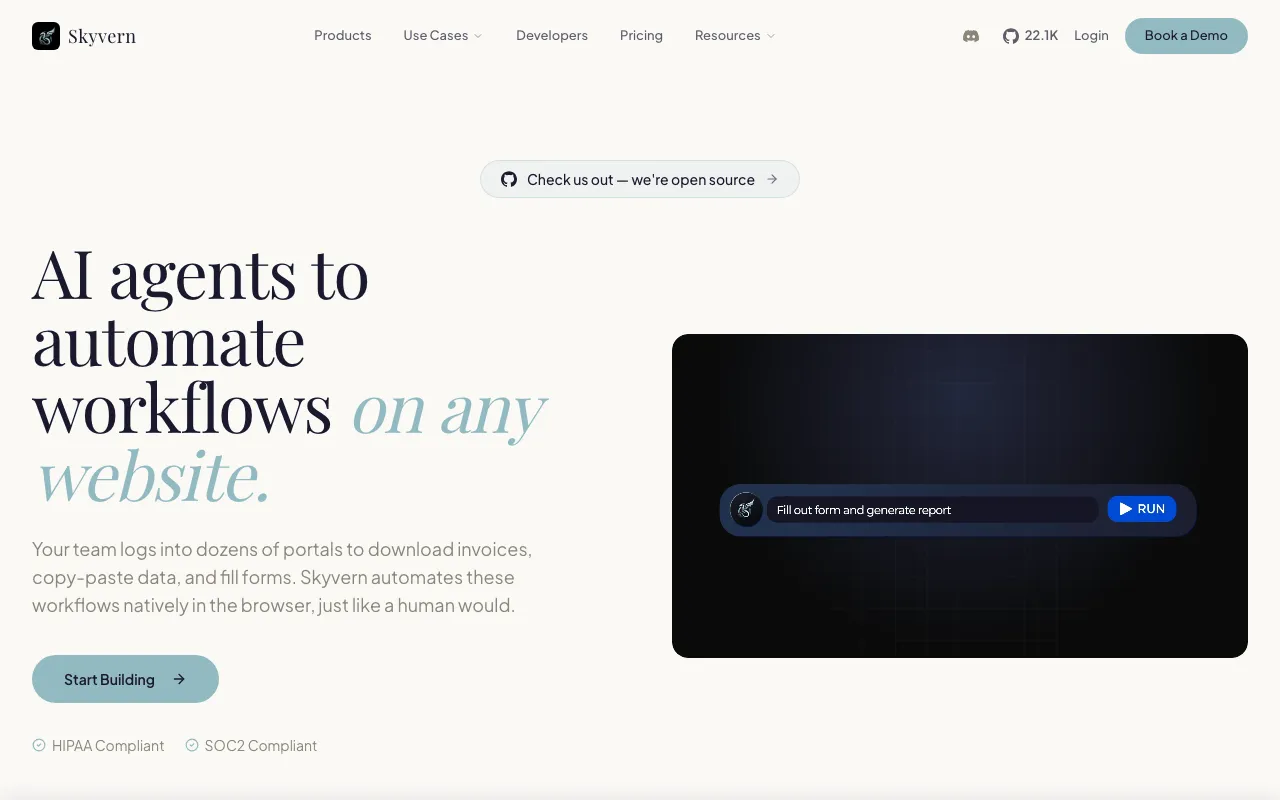
Open-source AI agent that automates browser workflows with vision instead of brittle selectors
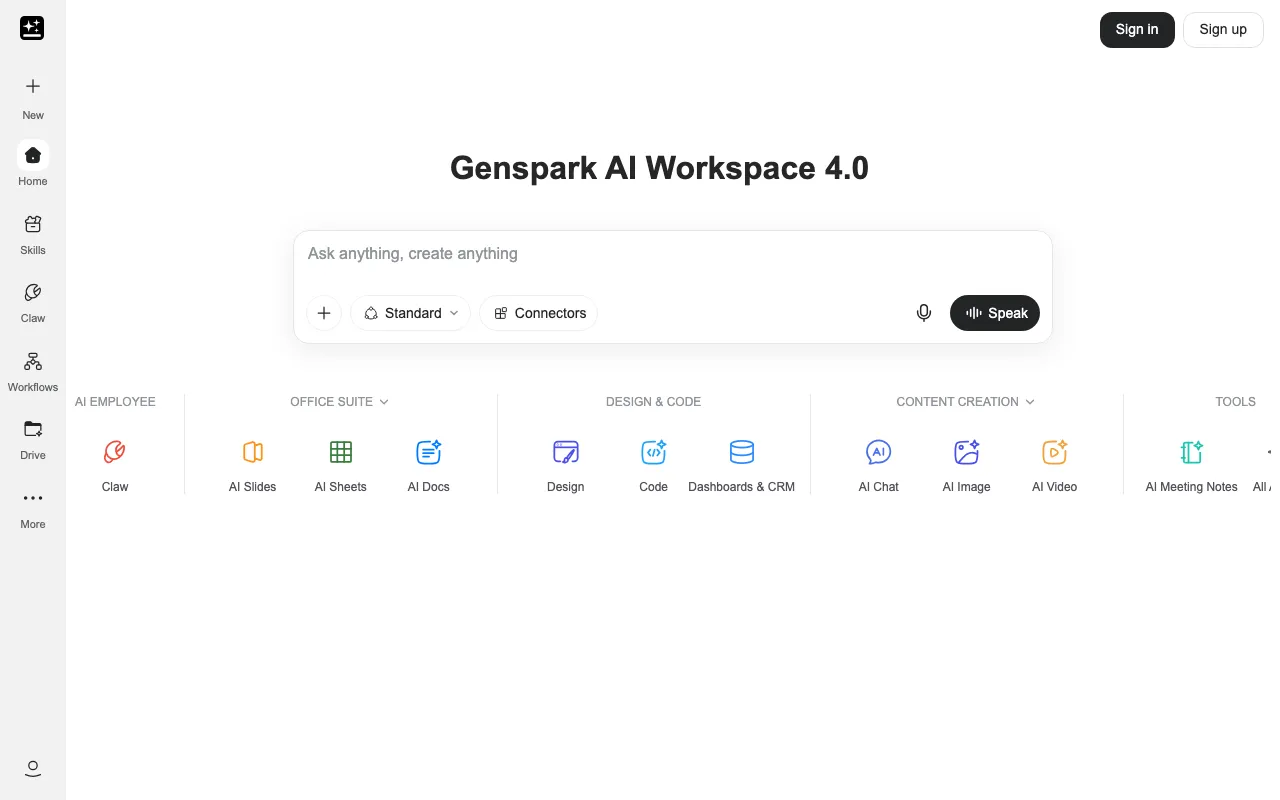
All-in-one AI Super Agent that runs research, slides, sheets, browsing, and real phone calls
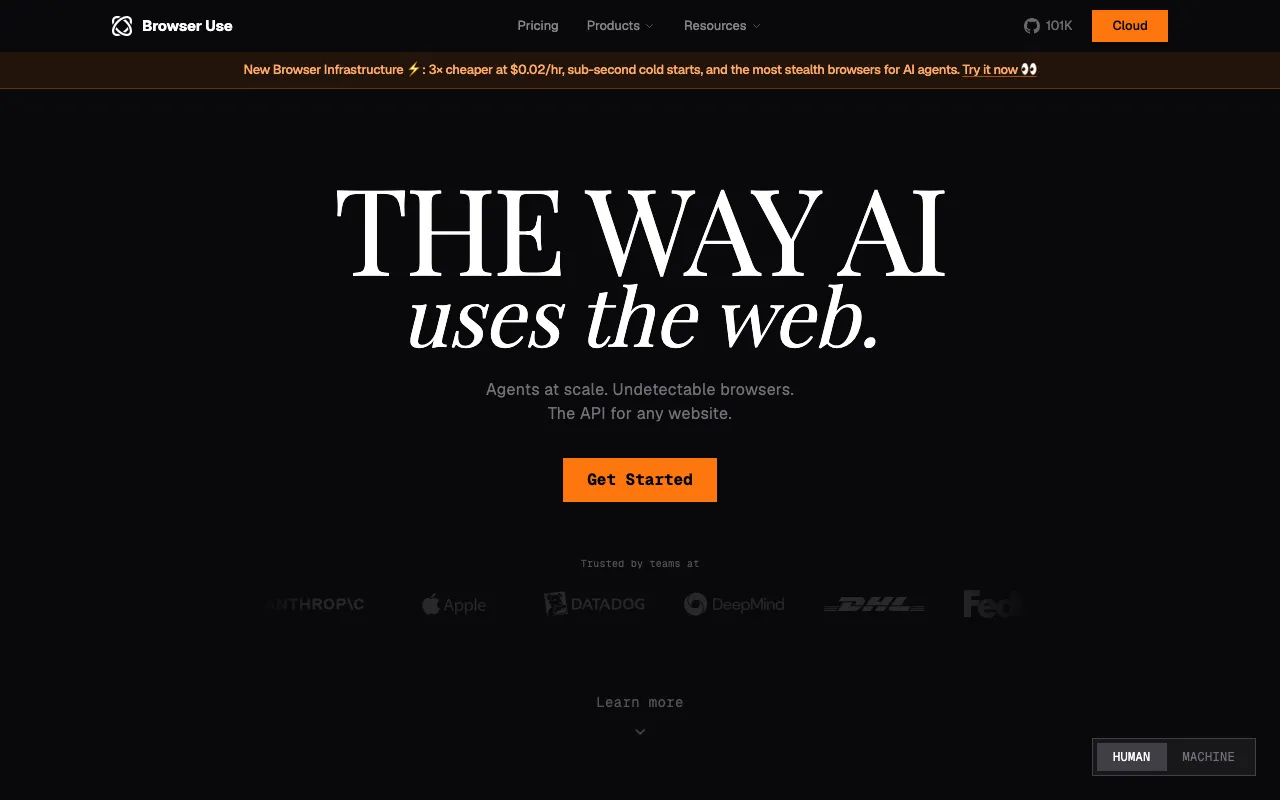
Open-source library that lets AI agents control a real browser to automate and extract from any site
Cloud browser infrastructure for AI agents — run and scale headless browser sessions via API; maker of the open-source Stagehand framework
Every tool in this list has a full profile in our directory with pricing verified against its official pricing page on the date shown on its stamp. Ranking reflects verified pricing, free-tier generosity, platform coverage, and documented capabilities — not sponsorships. Nobody can pay to appear here. Read the full methodology.
Yes — 5 of the 5 tools here have a free tier: Manus, Skyvern, Genspark, Browser Use, Browserbase. Pricing verified Jul 11, 2026.
Manus has the lowest verified monthly starting price in this list at $20/mo, checked against its official pricing page on Jun 20, 2026.
4 of the 5 tools list an API: Manus, Skyvern, Browser Use, Browserbase.