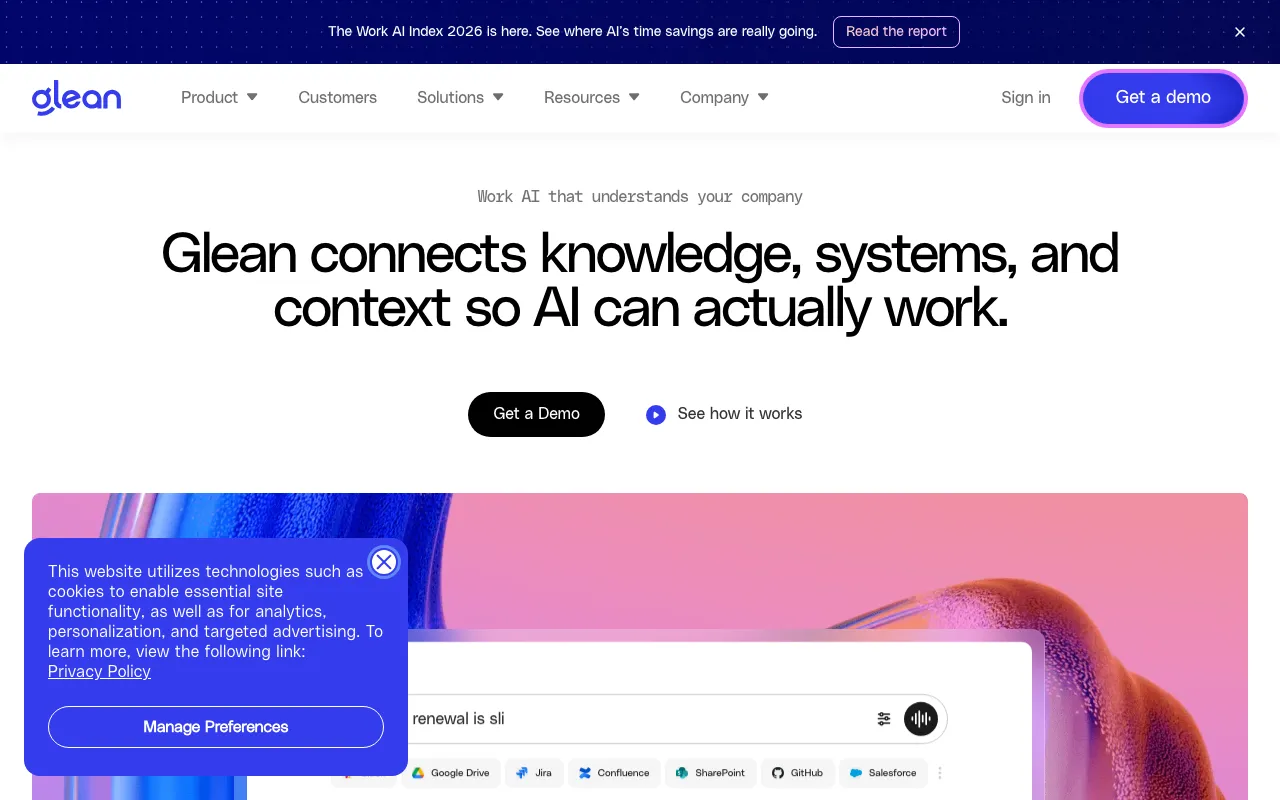
Glean
Enterprise Work AI platform unifying AI search, an assistant, and agents over a permission-aware company knowledge graph
CONTACT Verified JUL 12, 2026
4 tools ranked · last updated Jul 30, 2026 · how we picked
The best enterprise AI search platform in 2026 is Glean, which unifies 100+ prebuilt connectors — 275+ counting MCP-based ones — into a permission-aware knowledge graph with search, an assistant, and agents in one product, but it is contact-sales only with reported 100-seat minimums. The best self-serve pick is Onyx: MIT-licensed and free to self-host with no seat metering, or $20 per user a month in the cloud with 40+ app connectors.
Prices last verified Jul 30, 2026 against official pricing pages.
Glean is the most complete product in this category: 100+ prebuilt connectors (275+ counting MCP-based ones) feeding a permission-aware knowledge graph, with enterprise search, an assistant, and a custom agent platform in one place rather than three. Permission awareness is the part that matters most in practice — results respect each source app’s existing access rules, so a search never surfaces a document the person could not already open — and it carries SOC 2 Type II, ISO 27001/42001, HIPAA, and GDPR compliance. Pricing is contact-sales only; third-party reports put it near $40–$50 per user a month plus an AI add-on, but Glean publishes no official figure. It fits mid-to-large enterprises with knowledge scattered across dozens of systems. The caveats are the commercial ones: no free tier, reported minimum contracts around 100 seats, and a rollout measured in weeks to months rather than days.
Onyx is the open-source answer to Glean: a chat and search interface wired into 40+ company apps, with custom agents, deep research, and MCP actions, formerly known as Danswer and now past 31,000 GitHub stars. The self-hosted edition is MIT-licensed, free, and unmetered — no seat caps and no vendor telemetry on usage — and it inherits source-system permissions rather than flattening everything into one index. It is also model-agnostic, so you choose the LLM provider instead of being tied to the vendor’s. Onyx Cloud is $20 per user a month billed annually with a free trial; Enterprise adds SSO, on-premise, and region-specific deployment. It suits teams that want company-wide AI search they can host and audit. The caveats: the cloud has only a trial rather than a permanent free tier, OIDC and SAML single sign-on are enterprise-only, and self-hosting means you own the infrastructure and upgrades.
Dust approaches the same problem from the agent side: rather than one search box, you build custom agents grounded in Slack, Notion, GitHub, and Drive, with multi-agent orchestration, scheduled triggers, and remote MCP servers. Because a workspace exposes 20+ frontier models from five vendors, agents are not locked to a single provider. Billing moved to credit metering: a free seat carries 500 lifetime credits with no card and supports evaluation on real data with up to 5 users, a Pro seat is $30 per seat a month for 8,000 monthly credits ($24 annually), and a Max seat is $150 for 40,000. SOC 2 Type II and EU data residency are available on the self-serve plan. The caveats: the free seat’s 500 credits never reset, credit spend is hard to forecast on tool-heavy agents, and self-serve caps at 100 seats and 3 connectors.
Guru is a hybrid — an internal wiki, enterprise search, and intranet in one — and its differentiator is upkeep rather than retrieval: scheduled verification and auto-archival attack the stale-wiki problem directly, so answers carry a freshness signal instead of quietly rotting. It indexes 100+ sources and delivers answers inside Slack, Teams, a browser extension, or any MCP client, which means employees do not have to visit another destination site. Compliance covers SOC 2 Type II, HIPAA, GxP, SSO, SCIM, and DLP masking. Pricing is the problem: Guru removed published prices between March and April 2026 and is now contact-sales only. The last first-party figure was $25 per seat a month billed annually ($30 monthly) with a 10-seat minimum and AI credits included in the seat. The caveat is that there is now no free tier, no public trial, and no way to compare cost without a sales call.
We ranked these four on how well each unifies scattered company knowledge and then honours the permissions that knowledge already carries, weighing connector breadth, permission inheritance, deployment options, and pricing transparency. Glean leads on completeness and governance despite publishing no prices; Onyx ranks second because it delivers the same core job under an MIT licence you can run yourself, which is the only genuinely free entry point in this category. Half of this list is contact-sales only, so the figures quoted for Glean and Guru are labelled as third-party or historical rather than current vendor pricing — treat them as directional. This list ranks search over company systems, not personal note-taking or knowledge bases, which we cover separately. Prices were verified in July 2026 against each vendor’s official pricing page; no tool paid or was paid to appear.
Enterprise Work AI platform unifying AI search, an assistant, and agents over a permission-aware company knowledge graph
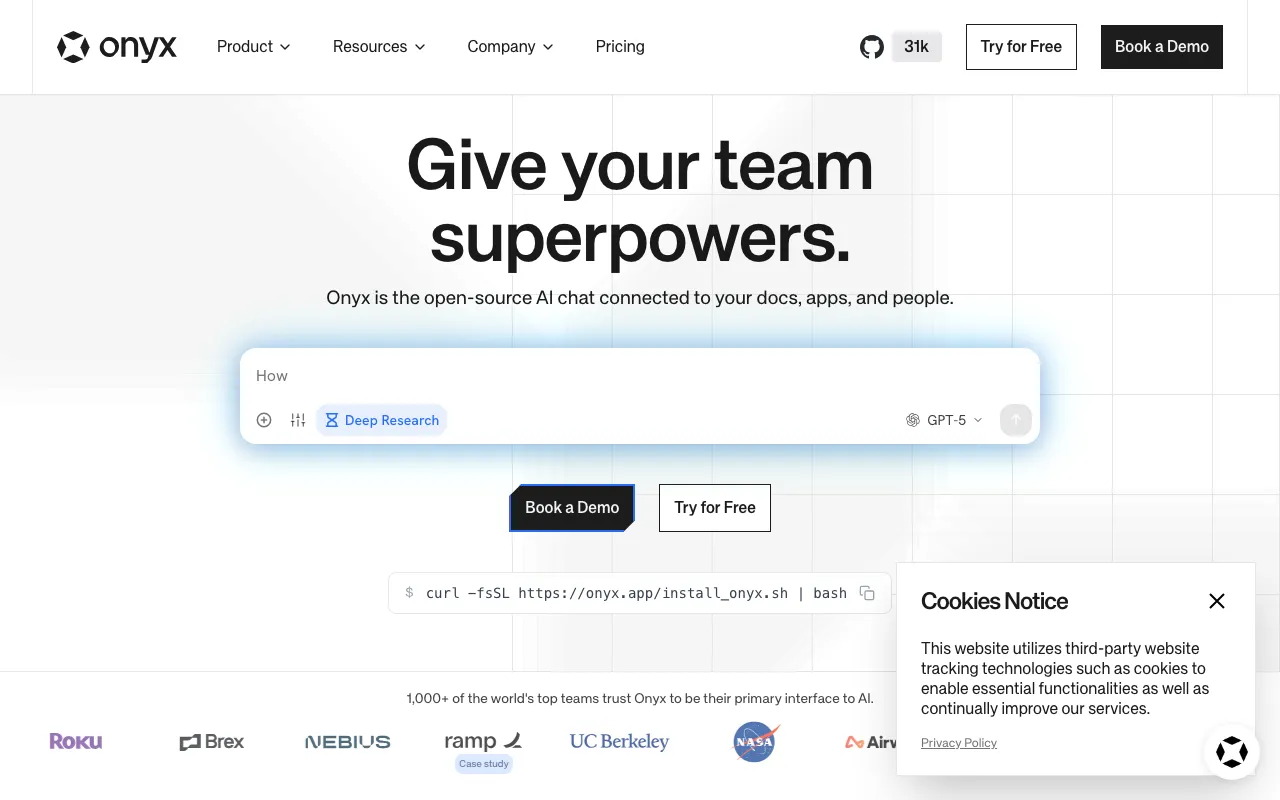
Open-source AI chat and enterprise search that connects to 40+ company apps, self-hosted or cloud
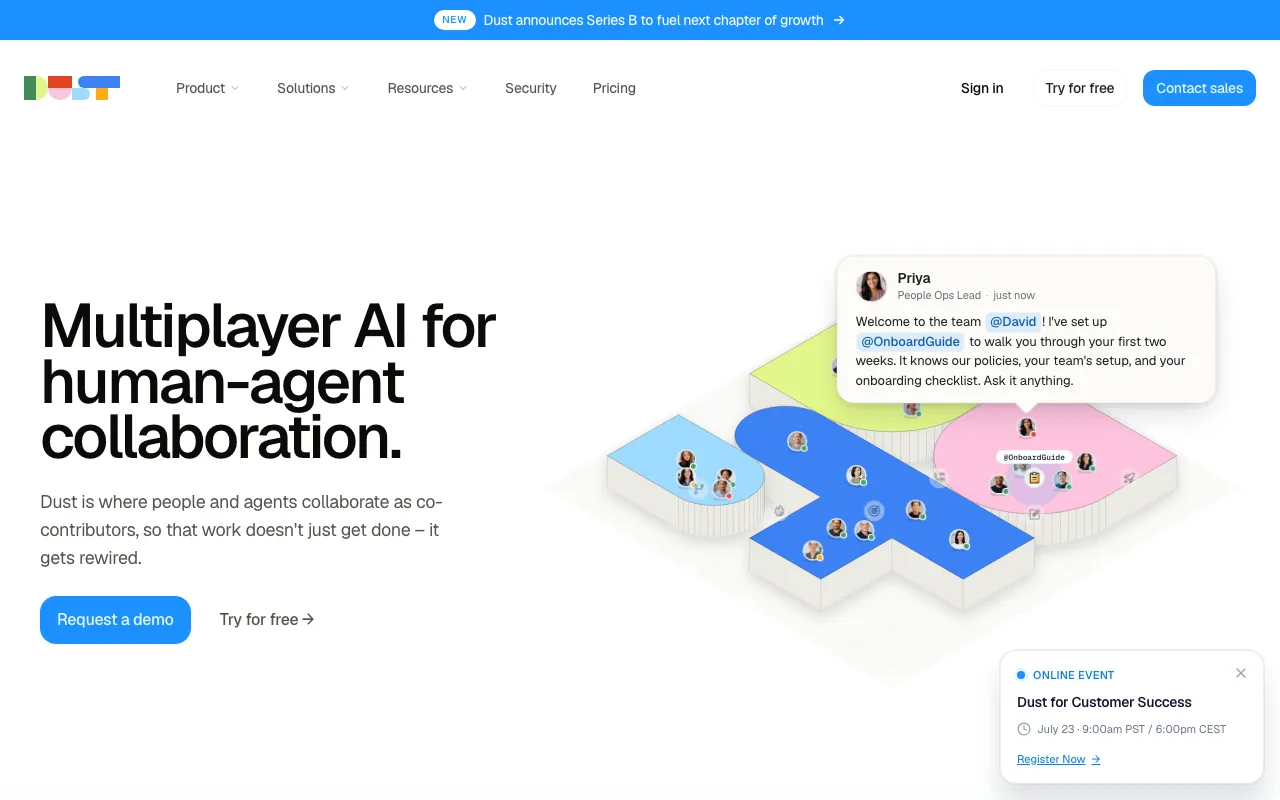
Enterprise platform for building and deploying AI agents connected to company data, tools, and workflows
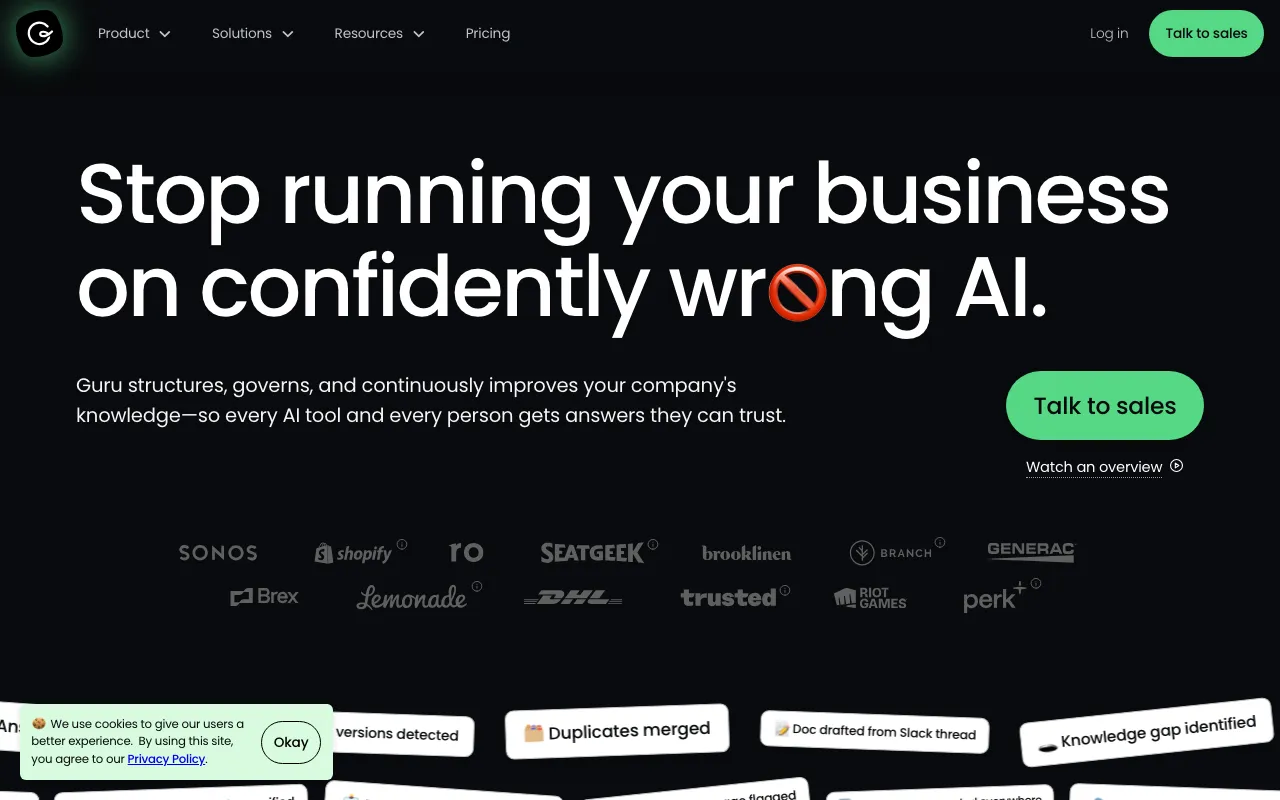
AI knowledge platform combining an internal wiki, enterprise search, and intranet with answers delivered in Slack, Teams, and the browser
Every tool in this list has a full profile in our directory with pricing verified against its official pricing page on the date shown on its stamp. Ranking reflects verified pricing, free-tier generosity, platform coverage, and documented capabilities — not sponsorships. Nobody can pay to appear here. Read the full methodology.
Yes — 2 of the 4 tools here have a free tier: Onyx, Dust. Pricing verified Jul 30, 2026.
Dust has the lowest verified monthly starting price in this list at $30/seat/mo, checked against its official pricing page on Jul 18, 2026.
4 of the 4 tools list an API: Glean, Onyx, Dust, Guru.