Claude
Anthropic's AI assistant built for long-context analysis, coding, and safe reasoning
FREEMIUM Verified JUL 3, 2026
6 tools ranked · last updated Jul 12, 2026 · how we picked
The best AI tool for students in 2026 is Claude, whose large context window makes it ideal for analyzing long readings, drafting essays, and explaining hard concepts step by step, with a no-card free tier and Pro at $20/month. The best study-from-your-own-sources tool is NotebookLM at $7.99/month, and Consensus is the best research pick, with unlimited free searches across 200M+ peer-reviewed papers.
Prices last verified Jul 3, 2026 against official pricing pages.
Claude is the strongest general AI assistant for students because of its large context window: you can paste an entire textbook chapter, lecture transcript, or dense research paper and have it explain, summarize, or quiz you on the whole thing without losing the thread. It is excellent for working through hard problems step by step, drafting and revising essays, and learning to code, and Anthropic’s safety focus makes its explanations careful and citation-aware. There is a genuinely usable free tier that needs no credit card, with Pro at $20/month and Max at $100/month for heavier use. The honest caveat: free and Pro usage limits are flexible rather than a fixed number of messages, so capacity is hard to predict and you can hit a cooldown mid-session. Used to understand material rather than to write it for you, Claude is the best all-round academic tool.
NotebookLM is built for exactly what students do: it grounds every answer in the sources you upload — your readings, lecture slides, and notes — and cites them, so it will not wander off into made-up facts the way an open chatbot can. Ask it a question and it answers from your documents, and its Audio Overview feature turns your notes into a podcast-style discussion you can listen to while commuting. The free Standard tier is generous (up to 100 notebooks), with Plus at $7.99/month and Pro at $19.99/month raising the limits. The honest caveat: it is locked to Google’s Gemini model with no option to swap it, and it requires a constant internet connection, so there is no offline study. For turning your own course materials into a searchable, cited study aid, nothing here beats it.
Consensus is the tool to reach for when an assignment needs evidence. It is an AI search engine over 200M+ peer-reviewed papers that synthesizes what the research actually says, including a “Consensus Meter” that summarizes whether studies broadly agree, disagree, or are mixed on a yes/no question — perfect for lit reviews and evidence-backed arguments. Crucially, its searches are unlimited on the free tier, with Pro at $15/month and Deep at $65/month adding advanced synthesis; the profile lists an entry price of $10/month. The honest caveat: coverage is limited to indexed academic papers, so it excludes grey literature and, by default, preprints — meaning very recent findings or non-journal sources may be missed. Always click through to read the actual studies before citing. For grounding essays and reports in peer-reviewed evidence, Consensus is the best research assistant here.
Grammarly is the writing safety net that follows you everywhere — browser, docs, email, and more — checking grammar, spelling, tone, and clarity in real time, and now generating and rewriting text on request. For students, the free tier alone covers the essentials that keep essays and emails clean, which is why it ranks this high despite not being a research tool. The free plan is free forever, Pro is $12/month, and Enterprise is custom. The honest caveat: the AI features are capped — roughly 100 prompts a month on free and 2,000 on Pro — so heavy AI-writing users will run into limits, and its suggestions can occasionally flatten your voice if you accept them uncritically. For catching mistakes across every app you write in, at no cost to start, Grammarly is the essential baseline tool.
SciSpace is the specialist for wrestling with dense literature. Its standout feature lets you chat with a PDF — highlight a confusing equation or paragraph and it explains it in plain language — and it runs literature reviews across a library of 280M+ papers, extracting and comparing findings into tables. For grad students and anyone processing large volumes of research, it turns hours of reading into guided study. There is a free tier, with Premium at $12/month and Advanced at $70/month. The honest caveat: like any AI research tool, it can hallucinate or over-interpret findings, so extracted claims and summaries always need checking against the source paper before you rely on them, and the free tier is credit-limited. For decoding and synthesizing academic papers, SciSpace is the most useful tool on this list.
QuillBot is a writing suite built around paraphrasing, with grammar checking, summarizing, translation, and a citation generator alongside it. Used well, it is a genuine study aid — rephrasing a dense passage into simpler words to check your understanding, or tightening your own clunky sentences. The core tools are free, with Premium at $19.95/month unlocking longer inputs and more modes. The honest caveat is twofold: the free tier caps paraphrasing at 125 words, which is restrictive for real documents, and — more importantly — paraphrasing to disguise someone else’s work is academic dishonesty and increasingly detectable, so it belongs in your process for understanding and self-editing, not for evading plagiarism checks. Kept to honest revision, QuillBot is a handy addition; treat its rewrite features as a comprehension aid, not a shortcut around doing the work.
We ranked these six by genuine usefulness for studying, researching, and writing, weighed against free-tier value — because students are price-sensitive — and no tool paid or was incentivized to appear. Per our editorial stance, Claude ranks first on the merits as the best all-round assistant for understanding material; NotebookLM wins for studying your own sources; Consensus and SciSpace are the research specialists; Grammarly is the essential free writing aid; and QuillBot rounds it out for revision, with a clear academic-integrity caveat. Every tool here has a free tier or free plan to start. Use these to learn faster, not to submit AI work as your own. Pricing was verified between June 11 and June 28 2026 against each product’s official pricing page.
Anthropic's AI assistant built for long-context analysis, coding, and safe reasoning
Google's AI research assistant that answers questions grounded in your own uploaded sources
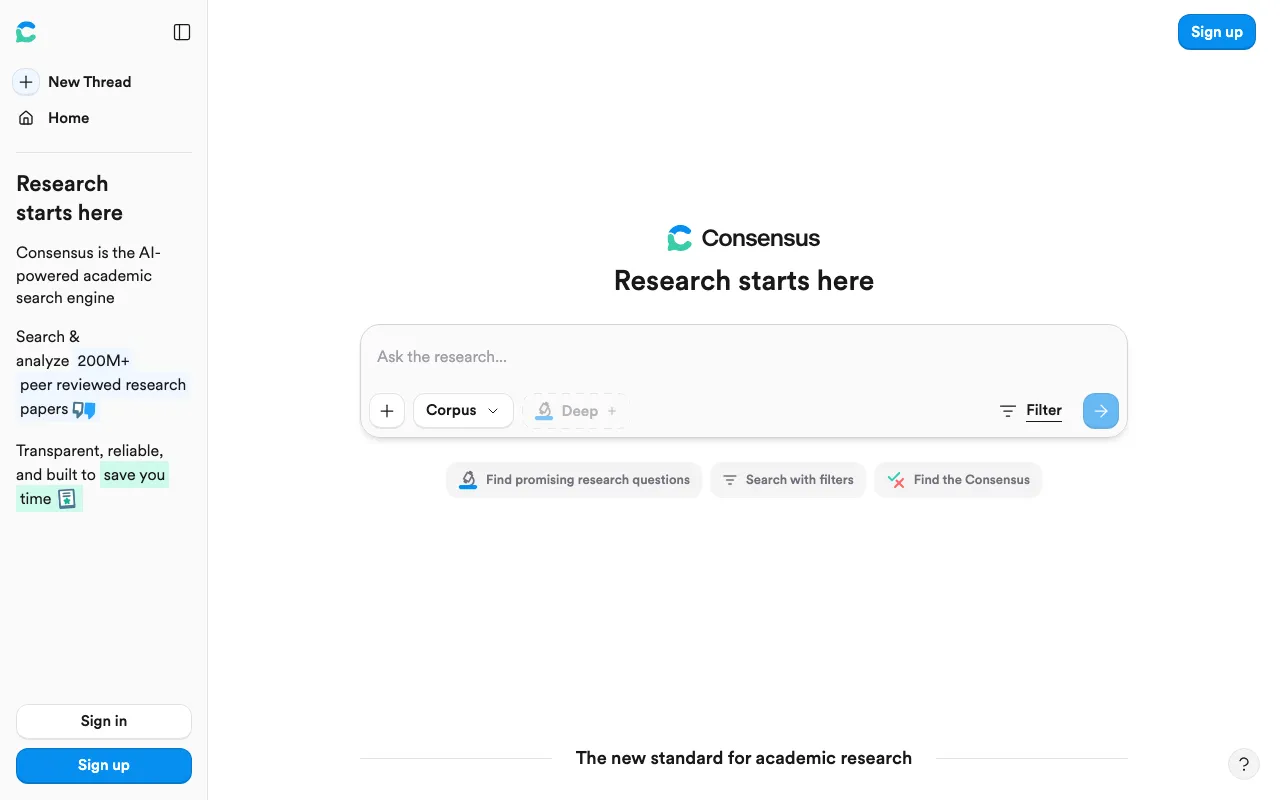
AI search engine for peer-reviewed research across 200M+ scientific papers
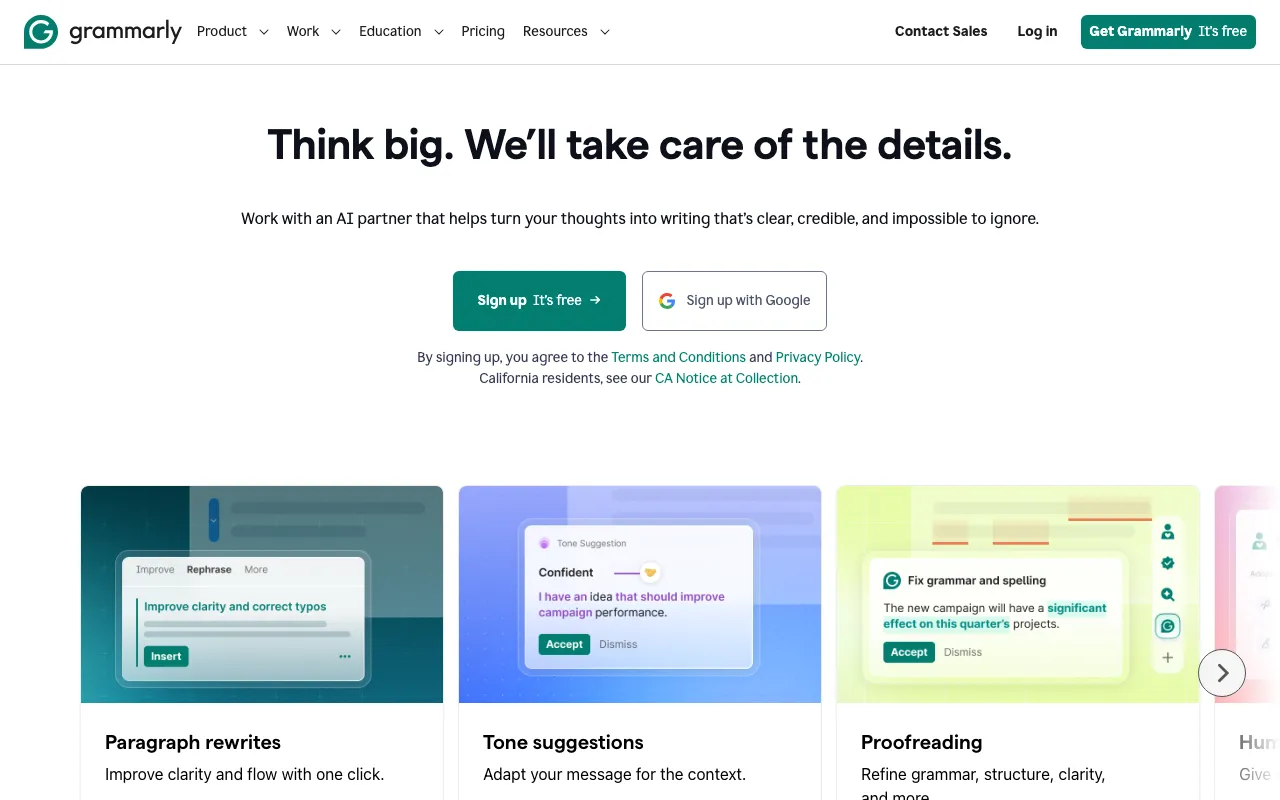
AI writing assistant that checks grammar, tone, and clarity and generates text across apps and browsers
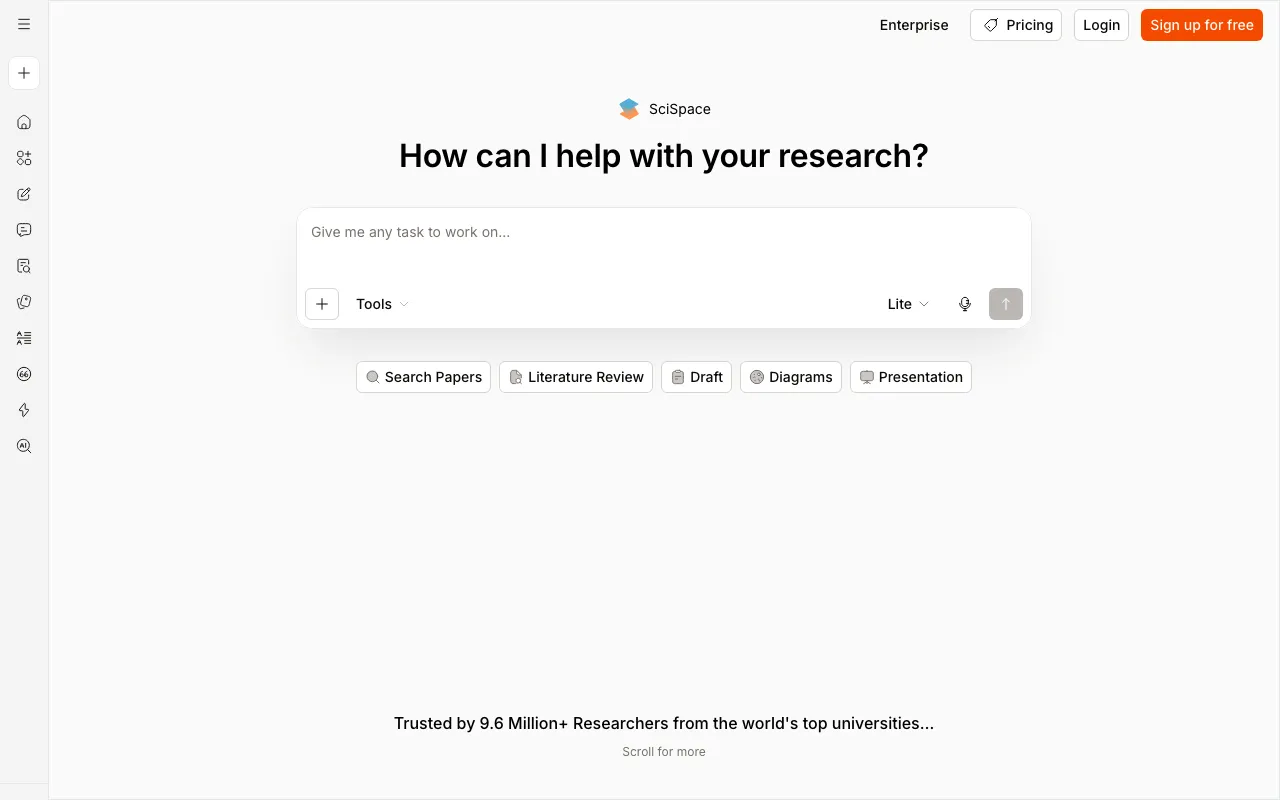
AI research assistant (formerly Typeset) to chat with PDFs, run literature reviews across 280M+ papers, and synthesize findings
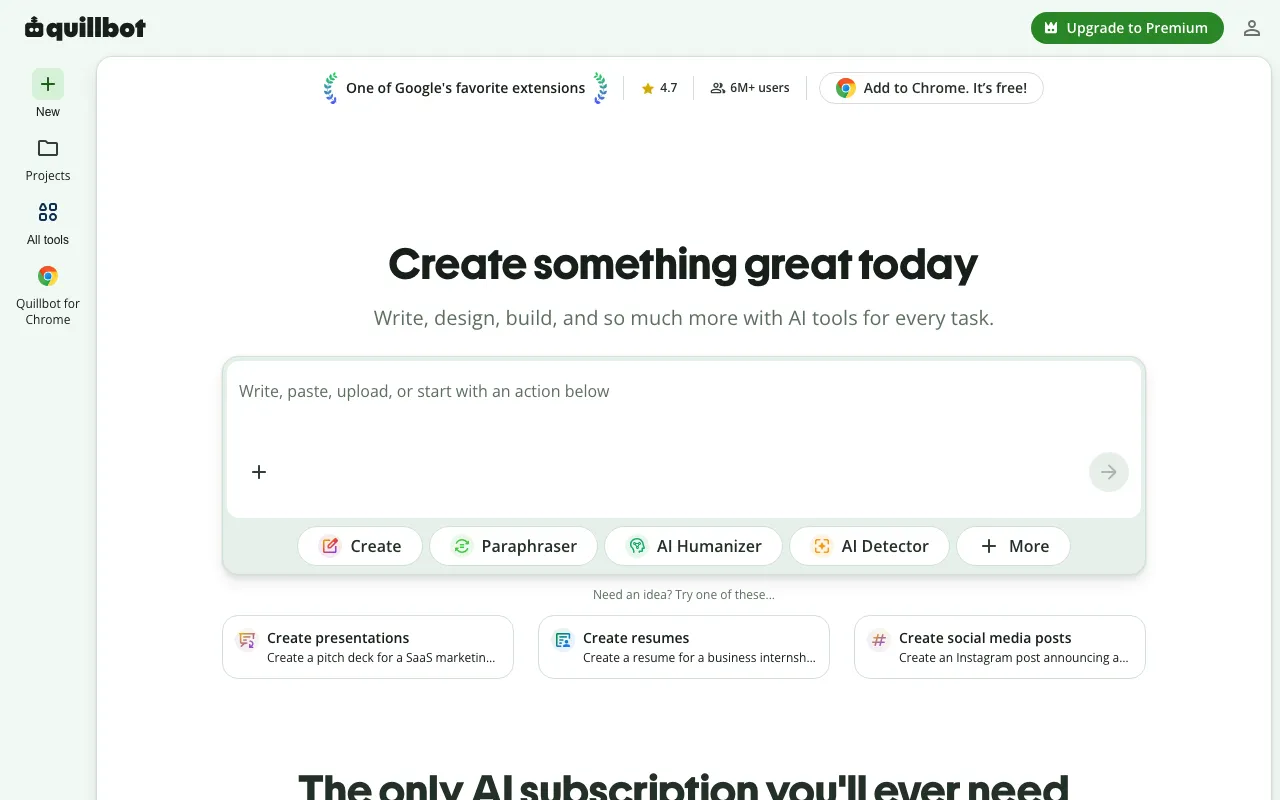
AI writing suite built around paraphrasing, with grammar checking, summarizing, and AI detection
Every tool in this list has a full profile in our directory with pricing verified against its official pricing page on the date shown on its stamp. Ranking reflects verified pricing, free-tier generosity, platform coverage, and documented capabilities — not sponsorships. Nobody can pay to appear here. Read the full methodology.
Yes — 6 of the 6 tools here have a free tier: Claude, NotebookLM, Consensus, Grammarly, SciSpace, QuillBot. Pricing verified Jul 12, 2026.
NotebookLM has the lowest verified monthly starting price in this list at $7.99/mo, checked against its official pricing page on Jun 11, 2026.
1 of the 6 tools list an API: Claude.