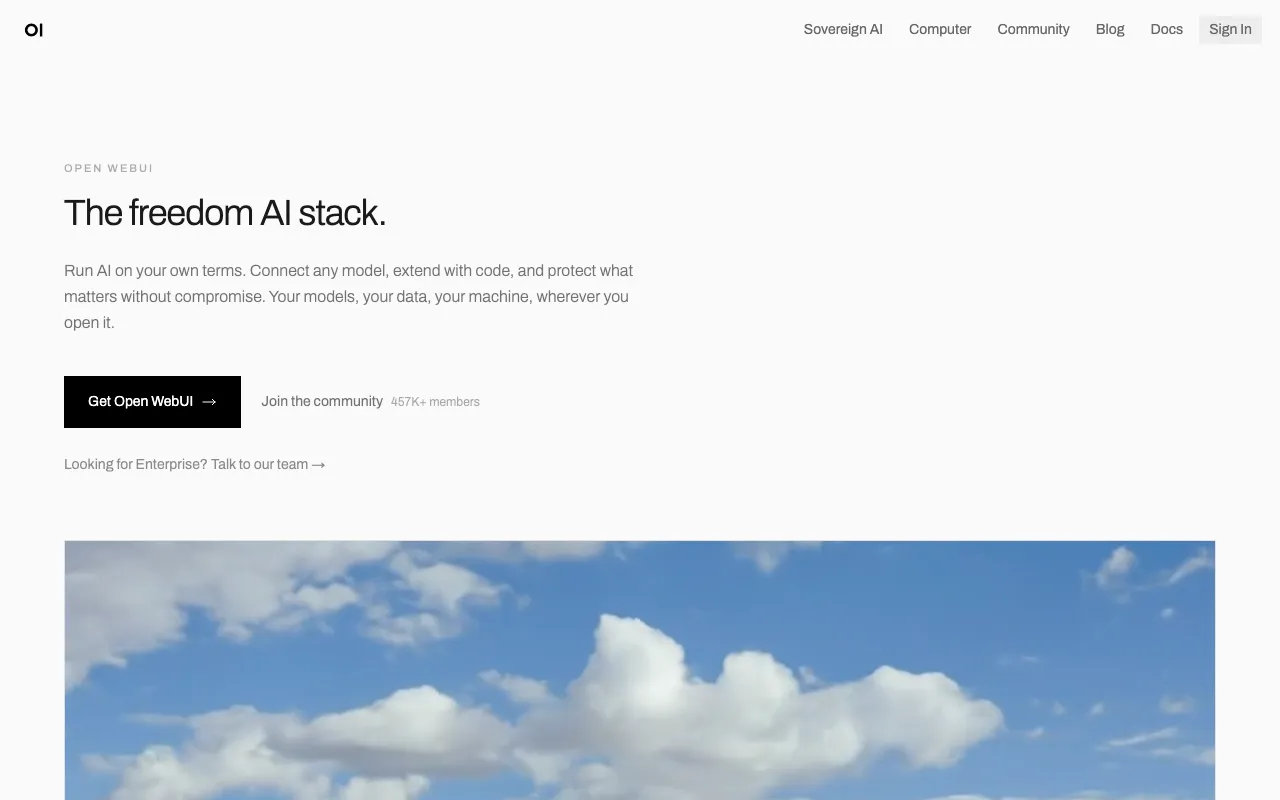
Open WebUI
Self-hosted web interface for local and API-based LLMs, free for unlimited users as long as the branding stays intact
OPEN-SOURCE Verified JUL 18, 2026
7 tools ranked · last updated Jul 18, 2026 · how we picked
The best self-hosted AI tool in 2026 is Open WebUI — a chat interface you run in Docker for an unlimited number of users at $0, with no vendor-managed cloud in existence. For automation, n8n's Community Edition self-hosts free with no execution cap, and Langfuse is MIT-licensed with every core feature free on your own servers. All 7 picks run on infrastructure you control, which is a different promise from a desktop app that happens to work offline.
Prices last verified Jul 18, 2026 against official pricing pages.
Open WebUI is the front door to a private AI stack: a chat interface you install with one pip command or a Docker container, pointed at Ollama, OpenAI, Anthropic or any OpenAI-compatible endpoint. It carries roughly 145,000 GitHub stars, supports fully air-gapped operation, and ships RBAC, SSO, LDAP and SCIM in the free build — enterprise authentication most vendors charge for. Self-hosting is free for an unlimited number of users, and there is no vendor cloud at all, which is precisely why it ranks first for this intent. Two caveats you should read before deploying: since v0.6.6 the licence forbids removing Open WebUI branding in deployments above 50 end users in a rolling 30-day window without a paid enterprise licence whose price is not published, and you own hosting, upgrades, backups, scaling and GPU capacity yourself.
n8n is the automation layer of a private stack: a visual canvas for multi-step workflows and AI agents, with JavaScript and Python escape hatches when the nodes run out. The Community Edition self-hosts free under a FairCode licence with the full source on GitHub and no execution cap, which is the meaningful difference from cloud automation platforms that meter every run. Cloud plans start at €20/month if you would rather not operate it. For teams whose reason to self-host is that customer data cannot pass through a third-party workflow engine, this is the one that keeps the data on your own box. Two caveats: the FairCode licence restricts embedding n8n inside a commercial product without a separate agreement, and self-hosting assumes Docker familiarity — this is not a tool for non-technical operators.
Dify is a visual builder for LLM applications — agents, RAG pipelines and multi-step workflows — whose core is open source and self-hostable, giving you full control over data, models and deployment. It is the right layer when the thing you want to keep private is an internal knowledge base: staff can query company documents through a Dify app without the documents leaving your infrastructure. The hosted Sandbox tier is free with 200 message credits, Professional is $59/month and Team is $159/month if you prefer their cloud. It ranks third because it depends on a model backend rather than providing one. The caveat is a cost that self-hosting does not remove: you still pay model providers separately for token usage unless you point it at local models, and enterprise pricing is contact-only.
Langfuse is MIT-licensed and deploys via Docker, Kubernetes or templates for AWS, Azure and GCP, with every core feature — tracing, prompt management, datasets, evals — free on your own infrastructure and no capability gating. That matters more than it sounds: prompts and traces contain the most sensitive text in an AI system, often full customer inputs, and shipping them to a third-party observability SaaS is exactly what a self-hosting policy exists to prevent. More than 2,300 companies use it. The caveat is operational weight: a production deployment wants Postgres, ClickHouse and Redis or S3, so this is not a single-container install at scale, and some enterprise features including SCIM, audit logs and project-level RBAC sit behind the commercial licence even though the core is MIT.
OpenHands is an autonomous coding agent that edits files, runs shell commands, browses the web and opens pull requests — and its MIT-licensed core is designed to be self-hosted, so your repository never has to be indexed by a vendor. It scores around 53% on SWE-bench Verified and carries roughly 78,000 GitHub stars, making it the strongest open alternative for teams that want agentic coding without shipping proprietary source to a third party. A hosted cloud version exists with $20 in free credits and at-cost LLM usage. The caveat is that self-hosting removes the platform cost, not the model cost: you still pay per token to whichever LLM provider you point it at, and the free individual cloud tier caps at roughly 10 conversations a day.
Flowise is a drag-and-drop builder for LLM apps and agents, and its distinguishing feature in this list is legal rather than technical: the Community Edition is Apache 2.0, a genuine OSI-approved licence with no FairCode restriction, no branding clause and no user threshold. If your organisation’s blocker is a legal review rather than an ops constraint, it is the cleanest thing here to get approved. It supports 100+ models with SDKs, and the managed cloud offers a free tier of 100 predictions a month, Starter at $35/month and Pro at $65/month for 5 seats. The caveat is maturity and scale: cloud prediction quotas are low enough that any real usage moves you to self-hosting anyway, enterprise pricing is undisclosed, and the ecosystem is smaller than n8n’s or Dify’s.
Ollama is the engine most of the tools above connect to: a free, open-source runtime that serves open-weight models over a REST API, a CLI and a desktop app, unlimited on your own hardware with no per-token cost. Open WebUI lists it as a primary backend, and Skyvern and Dify can both point at it, which is why a private stack usually has Ollama at the bottom of it. An optional Ollama Cloud adds remote inference at $20/month (Pro) or $100/month (Max). It ranks seventh here despite being excellent because it is the backend rather than the deployed service — a model runtime, not a multi-user application. The caveat for teams: the Team plan with SSO, centralised billing and access controls is still listed as coming soon, so governance is not yet available.
We ranked on whether you can genuinely deploy the tool as a service on infrastructure you control — Docker or Kubernetes, multi-user, air-gappable — and then on licence terms, ops burden and whether the free self-hosted path is production-usable rather than a teaser. That test draws a line this site’s other lists do not: a desktop app that runs offline on one laptop is local, not self-hosted, so LM Studio, ComfyUI and Stable Diffusion’s open weights are excluded here despite being excellent private-AI choices, and CLI tools like Aider and libraries like Browser Use are excluded because you import them rather than deploy them. Open-weight models such as Qwen and DeepSeek are models, not tools, and belong in our open-source LLM roundup. One tool we explicitly rejected: Botpress, whose self-hosted v12 edition is officially sunset with no way to run it on your own infrastructure. Pricing and licences were verified against each vendor’s official pages between June 23 and July 18, 2026. No tool paid to appear, and placements cannot be bought.
Self-hosted web interface for local and API-based LLMs, free for unlimited users as long as the branding stays intact
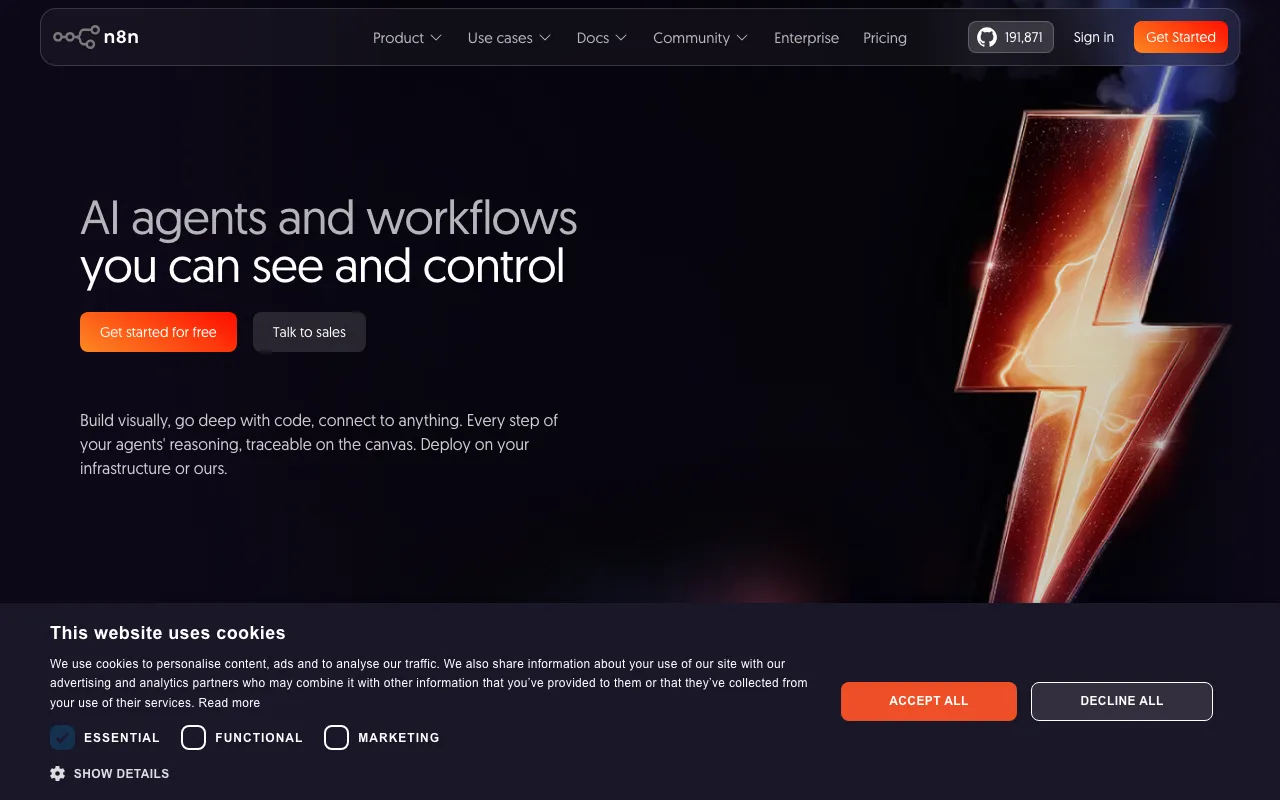
Open-source workflow automation platform for building AI agents and multi-app integrations
★ 195.2k as of Jul 5, 2026
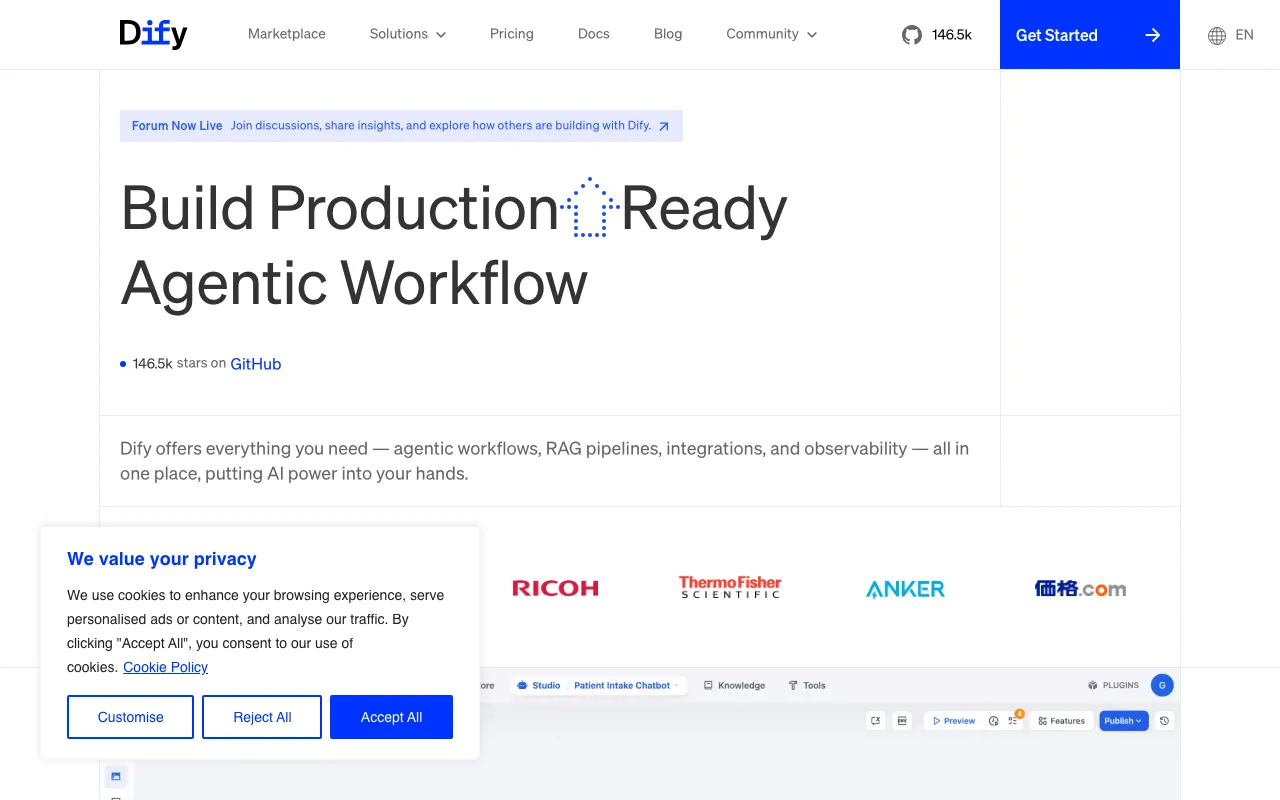
Open-source LLM app platform for building agentic workflows, RAG pipelines, and AI agents with a visual no-code builder
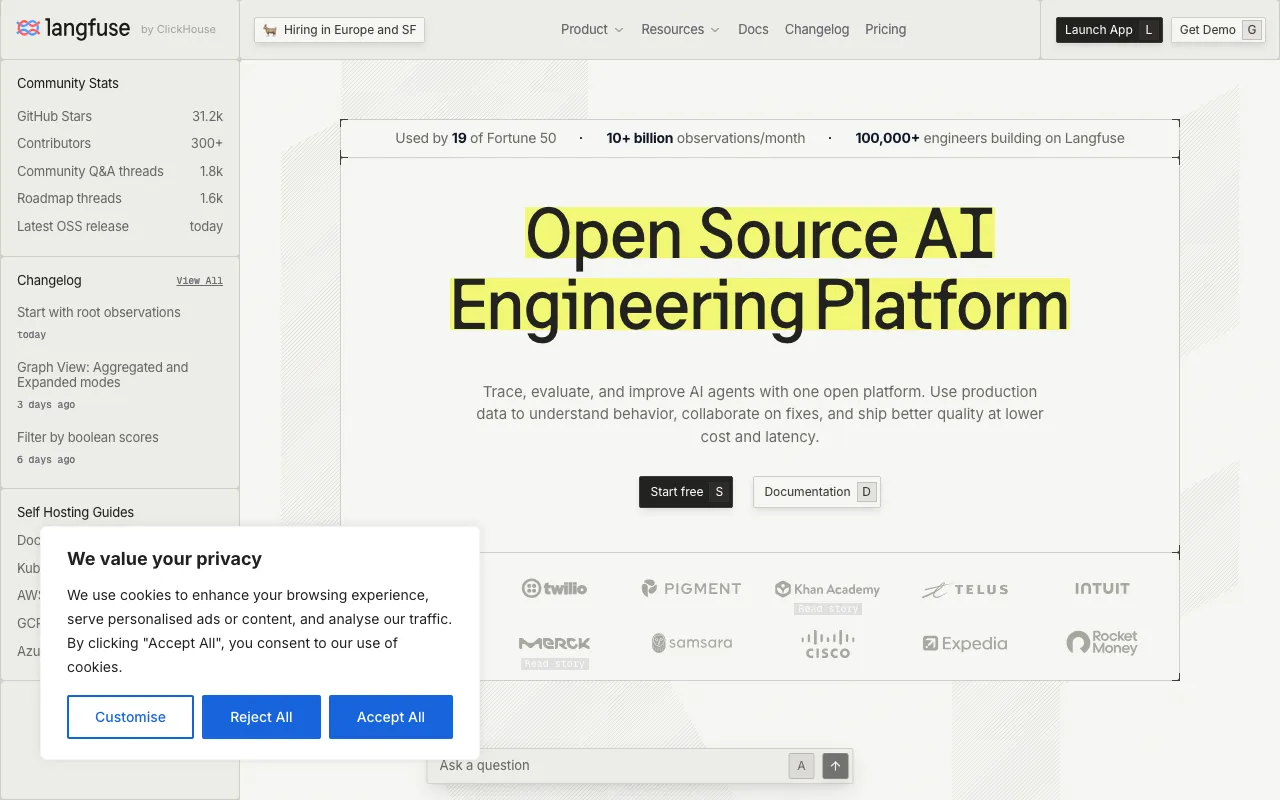
Open-source LLM engineering platform for tracing, observability, evals, and prompt management — self-host free or run on Langfuse Cloud
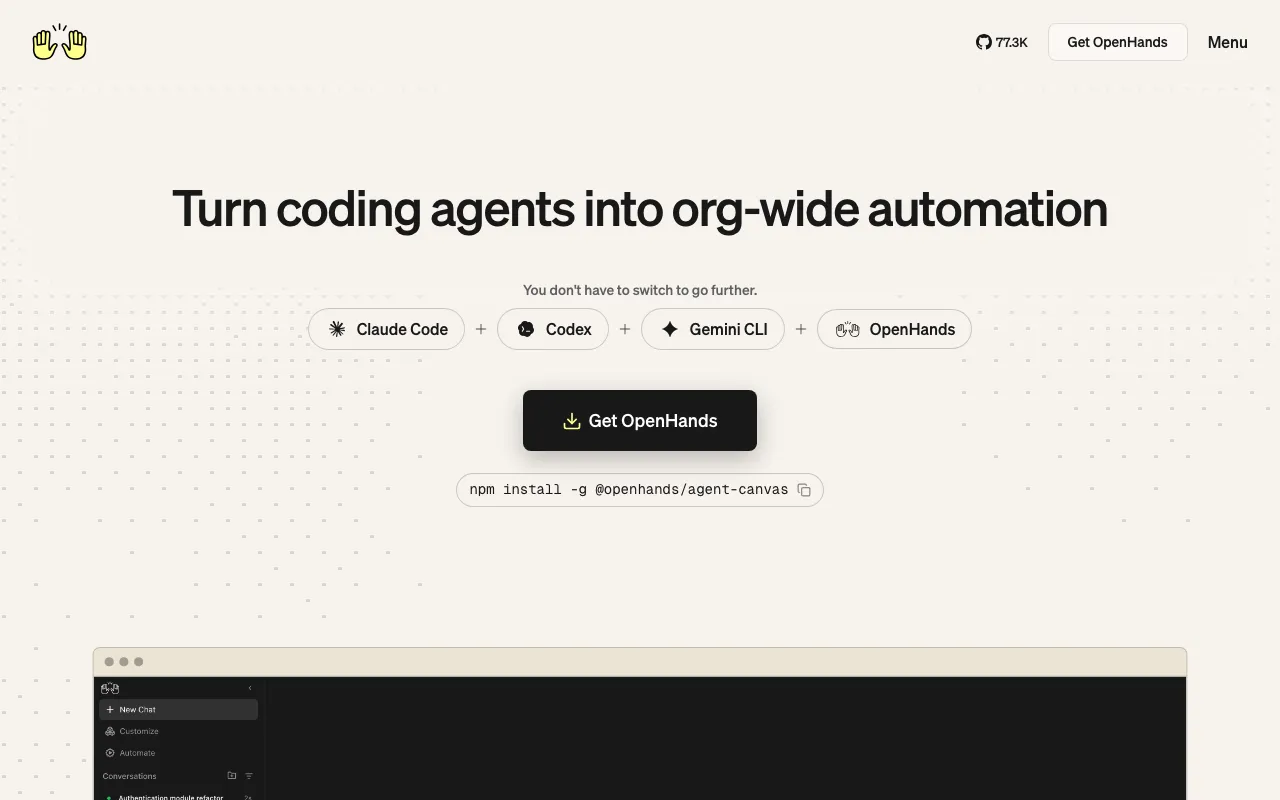
Open-source autonomous AI software-engineering agent that writes code, runs commands, and fixes issues
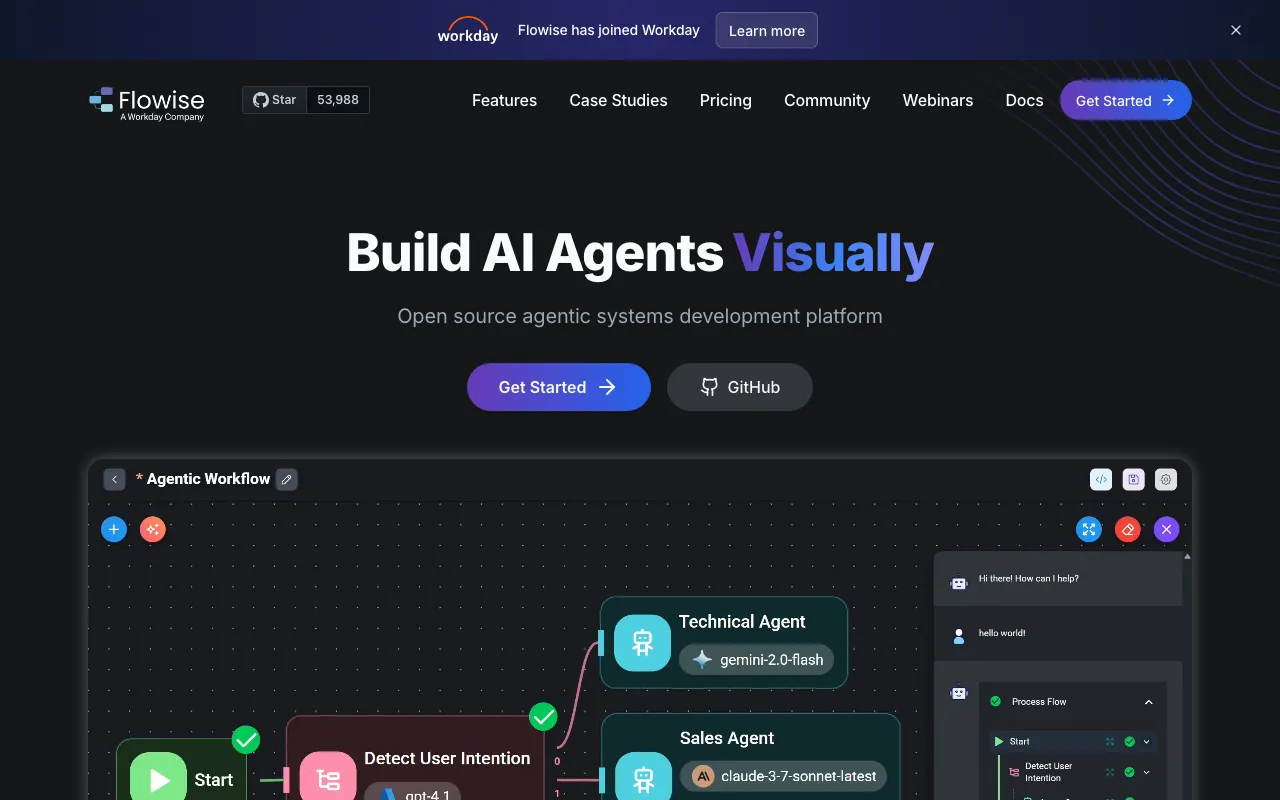
Open-source low-code platform to build LLM apps and AI agents with a drag-and-drop visual flow builder
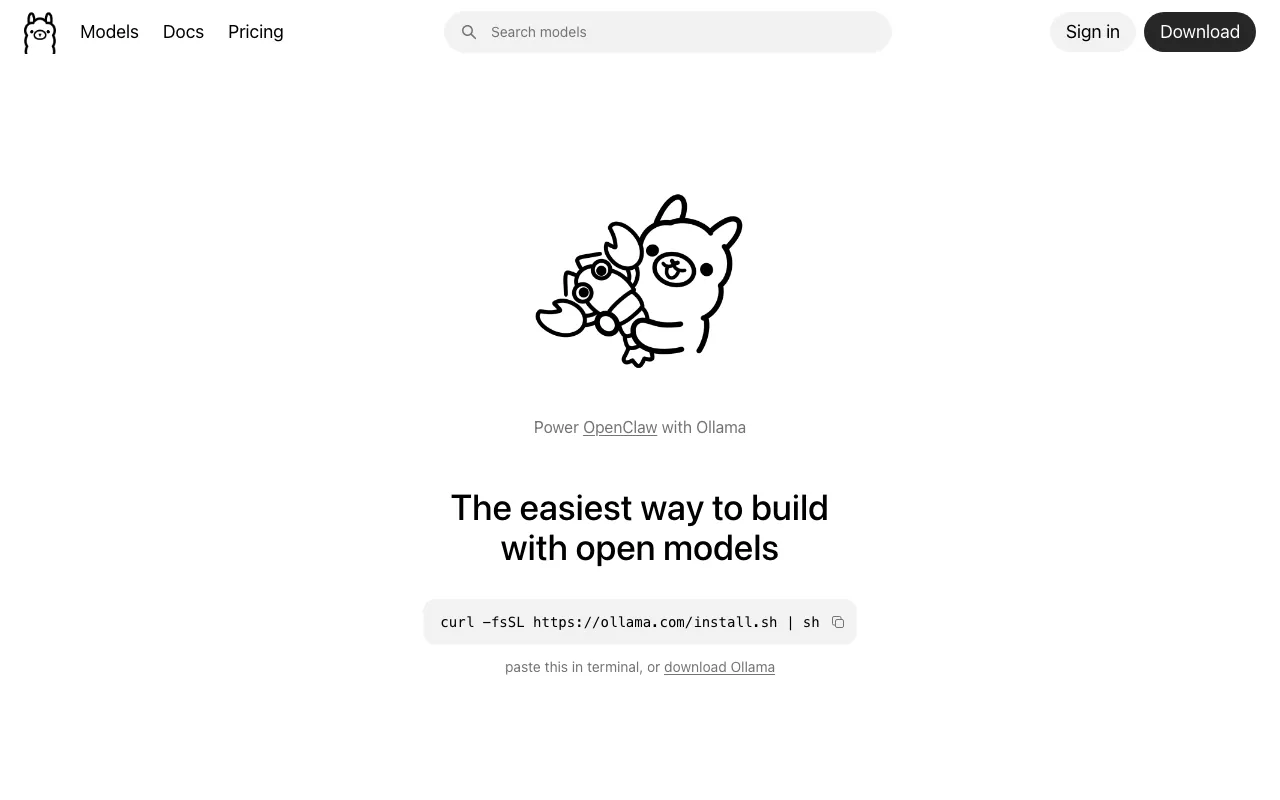
Free, open-source tool to run open-weight LLMs locally via CLI, desktop, or API — with an optional paid cloud for larger models
Every tool in this list has a full profile in our directory with pricing verified against its official pricing page on the date shown on its stamp. Ranking reflects verified pricing, free-tier generosity, platform coverage, and documented capabilities — not sponsorships. Nobody can pay to appear here. Read the full methodology.
Yes — 7 of the 7 tools here have a free tier: Open WebUI, n8n, Dify, Langfuse, OpenHands, Flowise, Ollama. Pricing verified Jul 18, 2026.
7 of the 7 tools list an API: Open WebUI, n8n, Dify, Langfuse, OpenHands, Flowise, Ollama.