NotebookLM
Google's AI research assistant that answers questions grounded in your own uploaded sources
FREEMIUM Verified JUN 11, 2026
7 tools ranked · last updated Jul 5, 2026 · how we picked
The best free AI research tool in 2026 is Google's NotebookLM, whose free tier lets you chat with up to 50 sources across 100 notebooks and run 50 queries a day at $0. For open-web questions, Perplexity gives unlimited free searches with citations, and Consensus searches 200 million peer-reviewed papers at no cost.
Prices last verified Jul 3, 2026 against official pricing pages.
NotebookLM is a source-grounded research tool from Google that lets you upload up to 50 documents per notebook and chat with them, with every answer cited back to your sources rather than pulled from the open web — which makes it exceptionally trustworthy for study and analysis. Its free tier is remarkably complete: 100 notebooks, 50 sources each, and 50 daily chats at $0 with no credit card, plus the signature Audio Overviews that turn your sources into a podcast-style discussion. It is the best free pick for students, researchers, and analysts working through their own reading. Paid access starts at $7.99/month via Google AI Plus for higher limits. The honest caveat: NotebookLM only reasons over documents you give it — it is not a live web search engine — so it answers questions about your sources, not about current events, and the 50-source-per-notebook cap can be limiting for very large research corpora.
Perplexity is an AI answer engine that combines real-time web search with large language models to produce cited, synthesized answers instead of a list of blue links. Its free tier allows unlimited basic searches at $0, with the multi-step Pro Search capped at roughly 5 queries a day — generous enough that most everyday research questions never hit a wall. Every answer footnotes its sources, which makes it easy to verify claims. Pro is $20/month and lifts the Pro Search cap while adding file analysis and access to frontier models. It is the best free pick for anyone who wants fast, sourced answers to open-web questions. The honest caveat: the free tier limits the deeper multi-step Pro Search to about 5 queries a day, so heavy research sessions push you toward the paid plan, and like any web-grounded AI it can still misread or over-summarize a source, so the citations are there to be checked, not trusted blindly.
Consensus is an AI academic search engine that queries over 200 million peer-reviewed papers and synthesizes findings through its “Consensus Meter,” which shows how many analyzed studies say yes, no, or possibly to a research question. Its free tier includes unlimited paper searches plus 3 Deep Searches a month at $0, which is enough for a student or clinician to ground a claim in real literature rather than a general chatbot’s guess. Pro is $10/month (annual) or $15 monthly for unlimited deep analysis. It is the best free pick for evidence-based questions where the source needs to be a real study. The honest caveat: the powerful Deep Search is limited to 3 uses a month on the free tier, and Consensus is built specifically for scientific literature — it is the wrong tool for general web questions, current news, or anything outside the peer-reviewed corpus.
Elicit is an AI research assistant that searches over 138 million academic papers and auto-generates structured, cited reports — extracting methods, sample sizes, and outcomes into a table you can scan rather than reading each paper in full. The free tier allows unlimited paper search and 2 automated reports a month at $0, enough to see how much time the structured extraction saves on a literature review. Pro is $49/month and unlocks systematic-review workflows that screen up to 5,000 papers. It is the best free pick for researchers doing structured evidence synthesis rather than casual reading. The honest caveat: 2 free reports a month is a tight allowance for anyone doing serious review work, and at $49/month the Pro tier is the most expensive entry point in this list — Elicit is built for rigorous academic workflows, so its value (and cost) is highest for researchers, not casual users.
Felo AI is a multilingual AI search platform that pairs real-time web search with AI summarization, document and slide creation, and access to models like GPT-4o and Claude — and its free tier gives 200 credits a day plus 5 pro searches daily at $0. Its standout strength is genuinely multilingual search: it surfaces and summarizes sources across languages, which most Western answer engines handle poorly. Pro is $14.99/month for 300 pro searches a day and a larger credit pool. It is the best free pick for anyone researching across languages or working outside English-first sources. The honest caveat: the free tier’s 5 daily pro searches are quickly used up on deep questions, and Felo is a younger, smaller product than Perplexity or Google’s tools, so its brand recognition and integration ecosystem are thinner — reconfirm the current free limits before relying on it for critical work.
SciSpace (formerly Typeset) is an AI research assistant that lets you chat with PDFs, run literature reviews across 280 million+ papers, and synthesize findings with its Deep Review feature, alongside an AI writer and paraphraser. Its free tier lets you upload and chat with papers at $0, which is the fastest way to understand a dense study without reading every page. Premium is $12/month (annual, about $20 monthly), adding larger limits and the deeper review workflows. It is the best free pick for students and researchers who want to interrogate individual papers conversationally. The honest caveat: the free tier’s limits on Deep Review and document volume mean heavy literature work quickly needs the paid plan, and as with any AI reading over dense academic PDFs, its summaries and extractions should be checked against the original before you cite them.
Exa is an AI-native web search engine and API built for agents and retrieval-augmented generation, with semantic search, page-content extraction, and a no-code Websets product for building structured result collections. Its free API tier includes 20,000 requests a month at $0, which is enough to prototype a real search-powered app before paying anything. Beyond the free tier, search bills from $7 per 1,000 requests, and Websets runs from free up to $449/month. It is the best free pick for developers who need programmatic, meaning-based web search rather than a consumer chat interface. The honest caveat: Exa is a developer tool, not an end-user app — there’s no polished chat UI, so getting value out of it requires writing code — and at scale the per-request pricing means costs grow with usage, unlike a flat consumer subscription.
We ranked these seven by the quality and generosity of their free tiers, because this is a list of the best search and research tools you can use without paying — not the best paid subscriptions. NotebookLM leads for researching your own documents; Perplexity leads for open-web questions; Consensus, Elicit, and SciSpace lead for academic literature. Note that several free tiers cap the most powerful features (Consensus Deep Search, Elicit reports) at a few uses a month. Ranking is editorial and weighs free-tier value over popularity; no tool paid or could pay to appear. Pricing and free-tier details were verified against each tool’s profile between June 11 and July 3, 2026.
Google's AI research assistant that answers questions grounded in your own uploaded sources
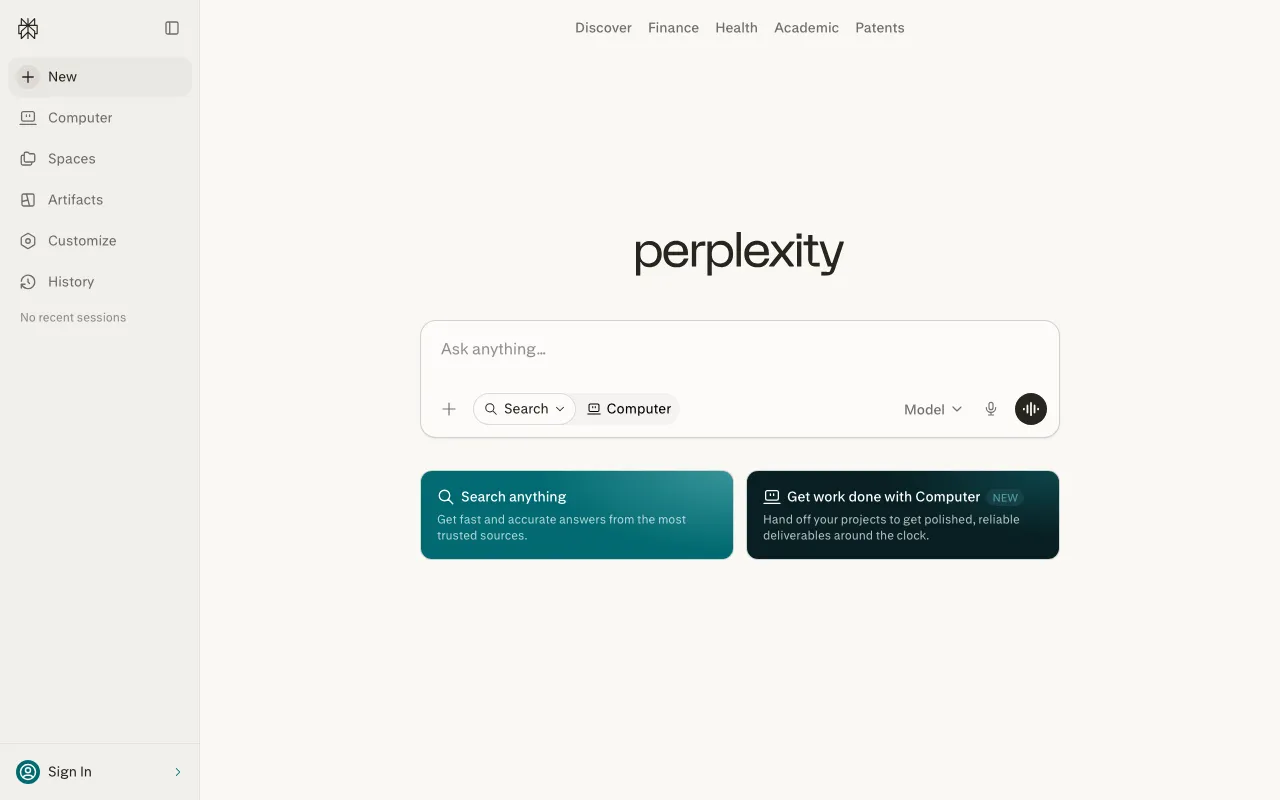
AI-powered answer engine that searches the live web and cites every source
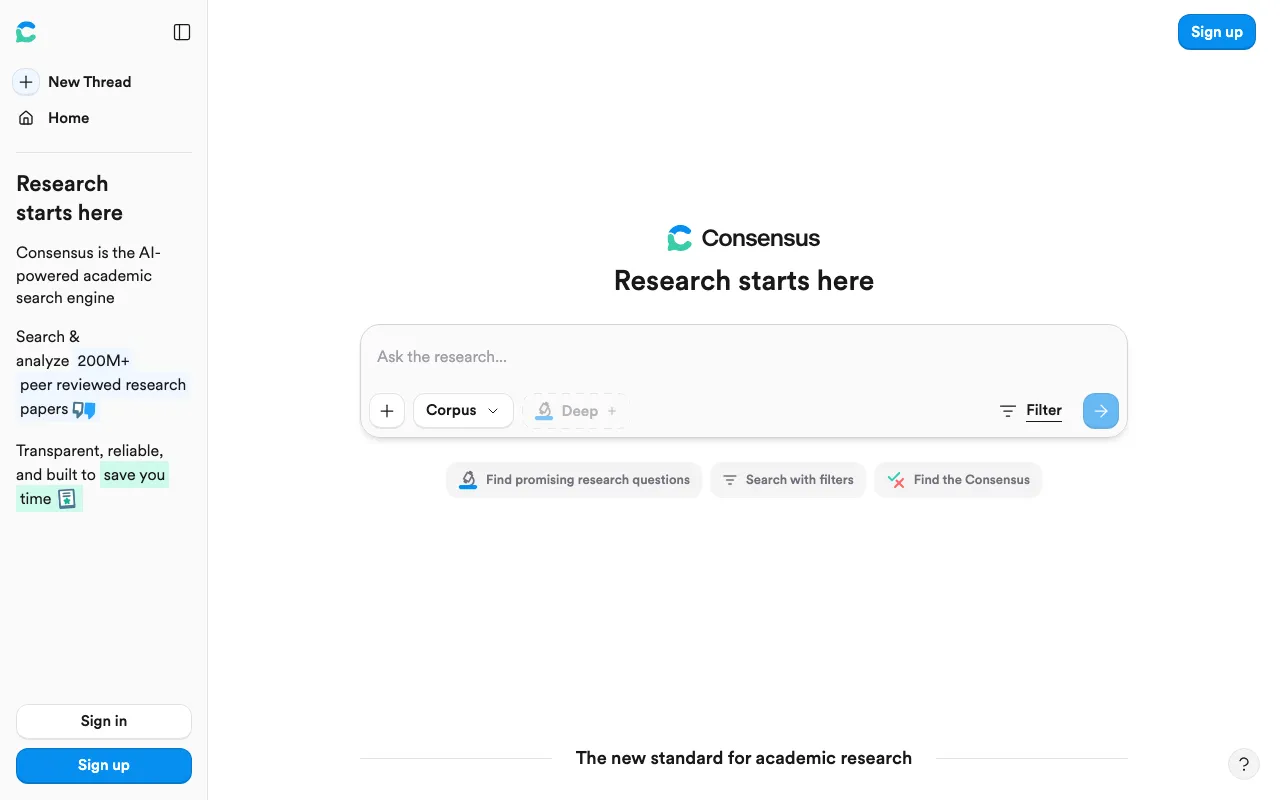
AI search engine for peer-reviewed research across 200M+ scientific papers
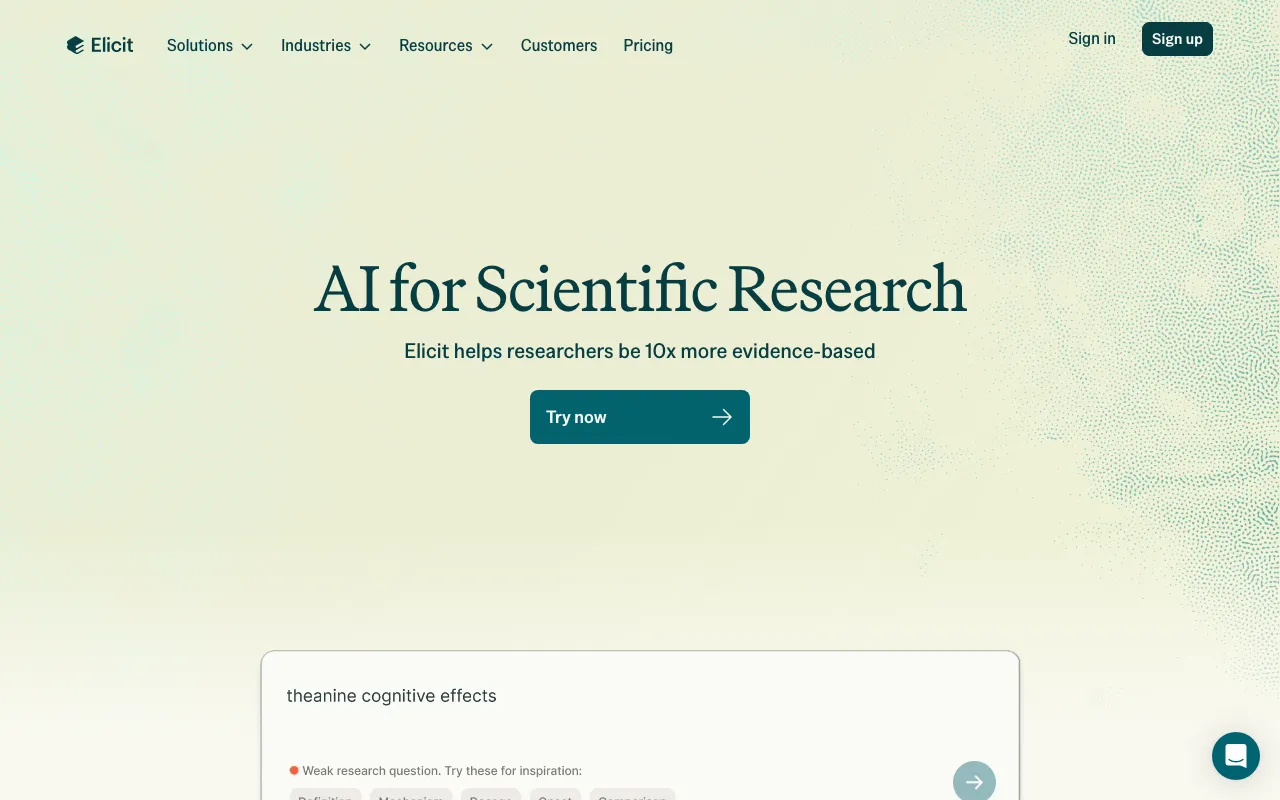
AI research assistant that searches, summarizes and extracts data from 138 million academic papers
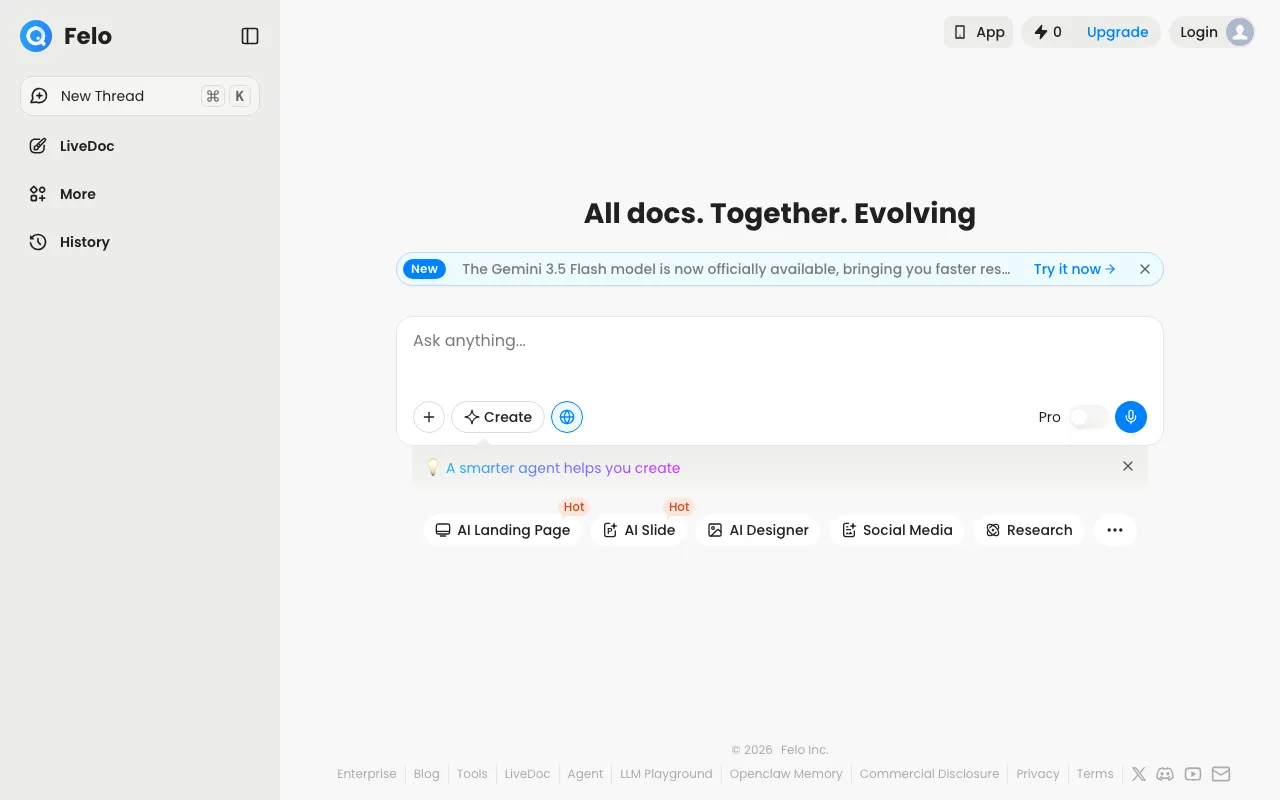
Multilingual AI search and creation platform combining research, summarization and content generation
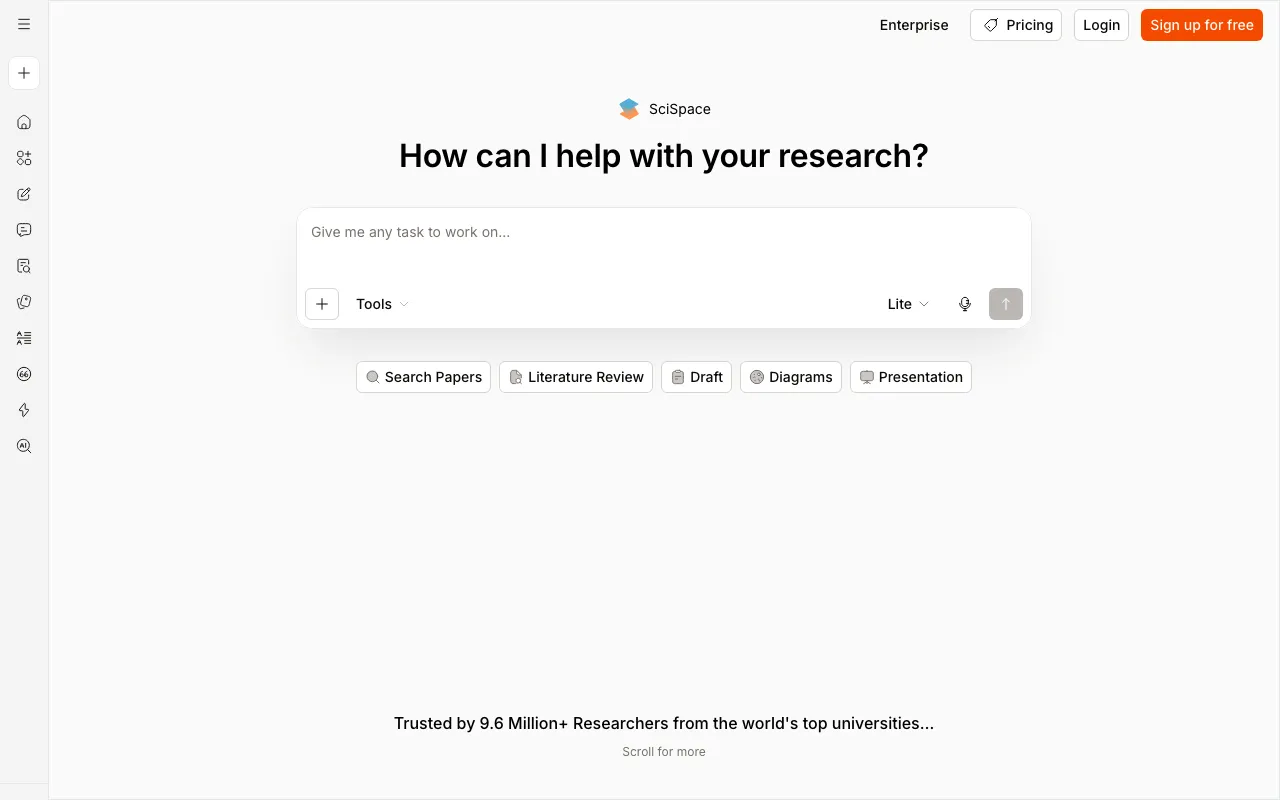
AI research assistant (formerly Typeset) to chat with PDFs, run literature reviews across 280M+ papers, and synthesize findings
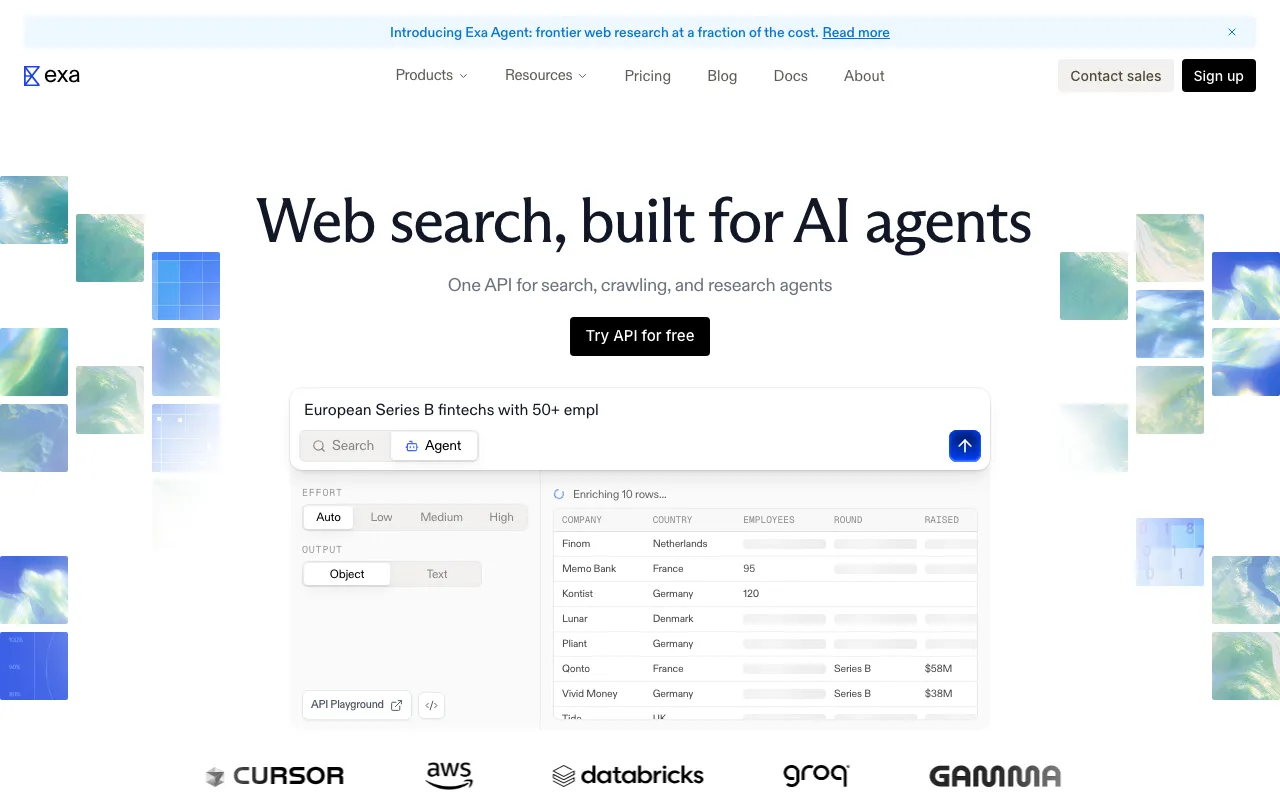
AI-native web search engine and API built for agents, with semantic search and content extraction
Every tool in this list has a full profile in our directory with pricing verified against its official pricing page on the date shown on its stamp. Ranking reflects verified pricing, free-tier generosity, platform coverage, and documented capabilities — not sponsorships. Nobody can pay to appear here. Read the full methodology.
Yes — 7 of the 7 tools here have a free tier: NotebookLM, Perplexity, Consensus, Elicit, Felo AI, SciSpace, Exa. Pricing verified Jul 5, 2026.
NotebookLM has the lowest verified monthly starting price in this list at $7.99/mo, checked against its official pricing page on Jun 11, 2026.
3 of the 7 tools list an API: Perplexity, Elicit, Exa.