Composio
Integration and tool-calling infrastructure that gives AI agents authenticated access to 1,000+ apps like Gmail, Slack, GitHub, and Notion
USAGE-BASED Verified JUL 17, 2026
6 tools ranked · last updated Jul 30, 2026 · how we picked
The best MCP server in 2026 is Composio, whose hosted Rube server gives a coding agent authenticated access to 1,000+ apps through managed OAuth, with 20,000 free tool calls a month before $29. Zapier MCP reaches further — 7,000+ apps from one endpoint — and Activepieces is the best self-hosted option, with unlimited MCP servers on an MIT-licensed core you can run for free on your own hardware.
Prices last verified Jul 30, 2026 against official pricing pages.
Composio is tool-calling infrastructure that lets an agent take real actions across 1,000+ apps — Gmail, Slack, GitHub, Notion — through managed OAuth, exposed to any MCP client via its hosted Rube server. That managed-auth layer is the reason it ranks first: connecting an agent to a company’s SaaS stack is mostly an authentication problem, and this is the one server that solves it rather than handing you a token file. The core SDK and the self-hosted MCP server are MIT-licensed. The hosted platform meters by tool call: 20,000 free per month with no card, $29/month for 200,000, and $229/month for 2 million, with overage around $0.299 per 1,000. The caveats are real: it is developer-facing, premium tools like search and sandboxes bill at roughly 3x the standard rate, and the vendor has scheduled a pricing change for August 15, 2026.
Zapier MCP turns the 7,000-app Zapier network into an agent toolset, which is simply more integration surface than any other server here can offer — if a business app exists, Zapier probably connects to it. For an assistant that needs to file a ticket, update a CRM record, or post to a niche SaaS tool, breadth beats elegance. Pricing follows the underlying platform: the free plan includes 100 tasks a month, Professional is $19.99/month for 750 tasks with multi-step workflows and premium app access, and Team is $69.50/month for 2,000 tasks across up to 25 users. It suits non-developers who want agent actions without writing code. The caveat is the same one that applies to Zapier generally — the free tier is effectively a sandbox at 100 tasks, and high task volumes push the monthly bill well above the base plan price.
Activepieces is an open-source automation platform whose MIT-licensed core you can run on your own servers with no cap on flows, runs, or tasks, and its cloud plan includes unlimited MCP servers outright. That combination — self-hostable, unmetered, and MCP-native — makes it the right pick when the tools you want to expose touch data that should not leave your infrastructure. The managed cloud gives 10 active flows free, then charges $5 per active flow per month with unlimited runs, so a flow firing 10,000 times costs the same as one firing once. Governance features (SSO, custom RBAC, audit logs) sit behind a custom annual contract. It fits teams that want a Zapier-style builder they control. The caveat: the 700+ piece catalogue is smaller than Zapier’s marketplace, so long-tail apps often need a custom piece or a raw HTTP call.
UIZZE is a remote MCP server built for one specific failure mode: coding agents produce interfaces that all look the same. It gives Claude Code, Codex, Cursor, and GitHub Copilot a searchable catalogue of 800,000+ real web and iOS screens, plus 35,000 UI elements, 14,000 design systems, design contracts, implementation audits, and screenshot critique — all inside the agent session. A free no-auth preview server exposes one tool, check_ui_slop, with no signup at all, so the core audit is testable before paying. Full access is $9/month or $99 once for lifetime, which makes it one of the cheapest paid MCP servers in daily use. The caveats are its deliberate narrowness — it improves visual taste and evidence, not correctness, accessibility, or performance — and its coverage: the catalogue is web and iOS only, with no Android or desktop screens.
Pieces runs a Long-Term Memory Engine locally, capturing what you do across your IDE, browser, and terminal, then exposes that context to Claude, Cursor, or any other MCP client through the Pieces MCP server. The value is that your assistant stops asking what you were working on yesterday — it can query up to 9 months of your own captured activity, and because capture is on-device the raw context never has to leave your machine. The free tier runs local models with unlimited snippets and the full memory window; Pro is $18.99/month ($169.99/year) for premium cloud models like Claude and GPT. It works alongside existing editors rather than replacing them. The caveats: the always-on capture and background PiecesOS service consume real memory and CPU, and premium cloud models require the paid plan — the free tier is local-model only.
Graphite is a code review platform built around stacked pull requests and a stack-aware merge queue for GitHub, and its MCP server lets an agent drive that workflow directly — creating, restacking, and navigating PRs without you leaving the terminal. For teams that ship many small dependent changes, this is the difference between an agent that writes code and one that can actually land it. The MCP server is included on the free Hobby tier alongside the CLI and VS Code extension for personal repositories; Starter is $20 per user a month for GitHub organization repos, and Team is $40 per user a month for unlimited AI reviews via the Graphite Agent, both billed annually. The caveats are scope: it is GitHub-only with no GitLab or Bitbucket support, and stacking changes how a team commits and branches, which has a genuine learning curve.
We ranked these six on what they add to an agent session that the agent cannot do alone — authenticated app access, private context, or a workflow it can drive — weighing free-tier usability, published pricing, and whether the server is the product or an afterthought bolted onto one. Composio leads because managed OAuth across 1,000+ apps is the hardest part of tool use and it gives 20,000 calls a month free; Zapier ranks second on raw reach despite tying MCP actions to its task-based plans. Web-data servers such as Firecrawl and Apify also ship excellent MCP endpoints, but we rank those in our web scraping guide rather than counting them twice here. Prices were verified between June and July 2026 against each product’s official pricing page; no tool paid or was paid to appear.
Integration and tool-calling infrastructure that gives AI agents authenticated access to 1,000+ apps like Gmail, Slack, GitHub, and Notion
No-code automation platform that connects 7,000+ apps to build multi-step workflows without writing code
Open-source AI automation platform with MCP servers and AI agents — MIT-licensed core you self-host free, plus a per-flow managed cloud
MCP server that feeds coding agents 800,000 real app screens so the UI they generate stops looking generic
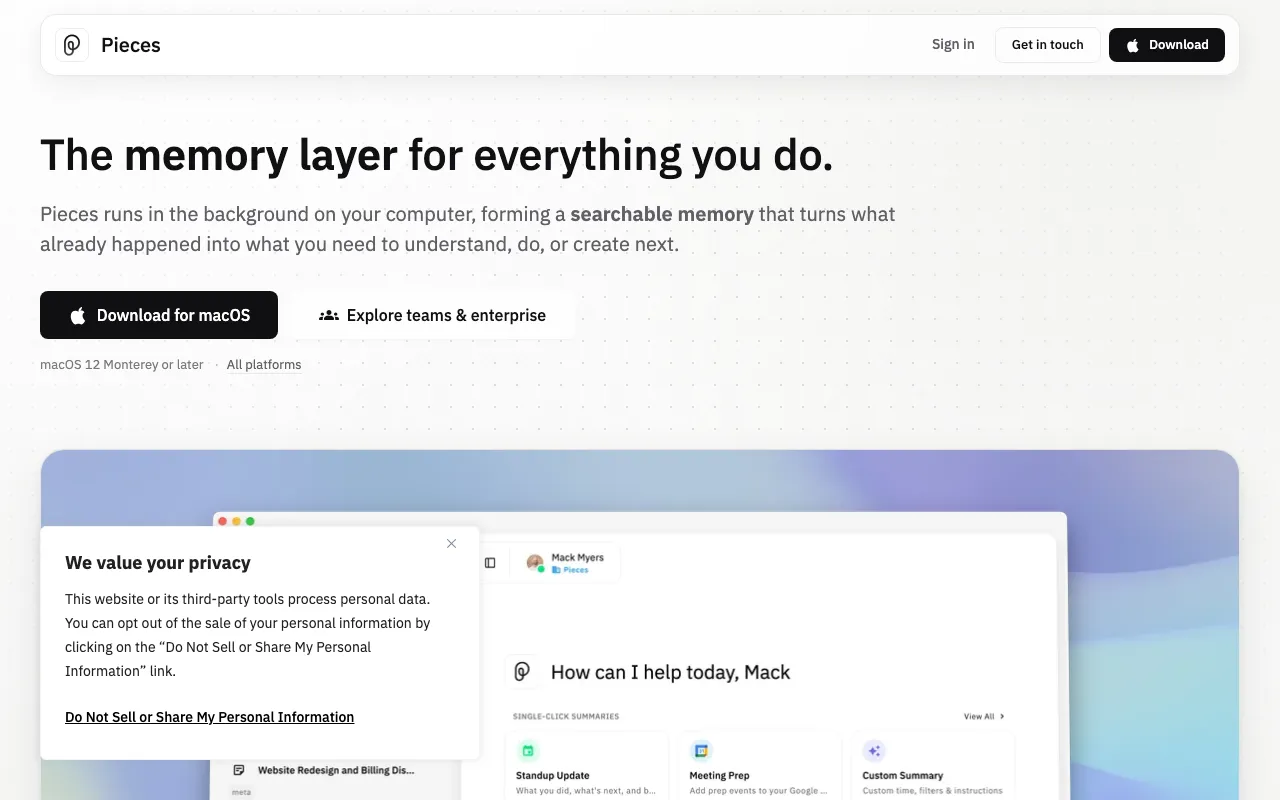
On-device AI coding companion with a Long-Term Memory Engine that captures context across your IDE, browser, and terminal
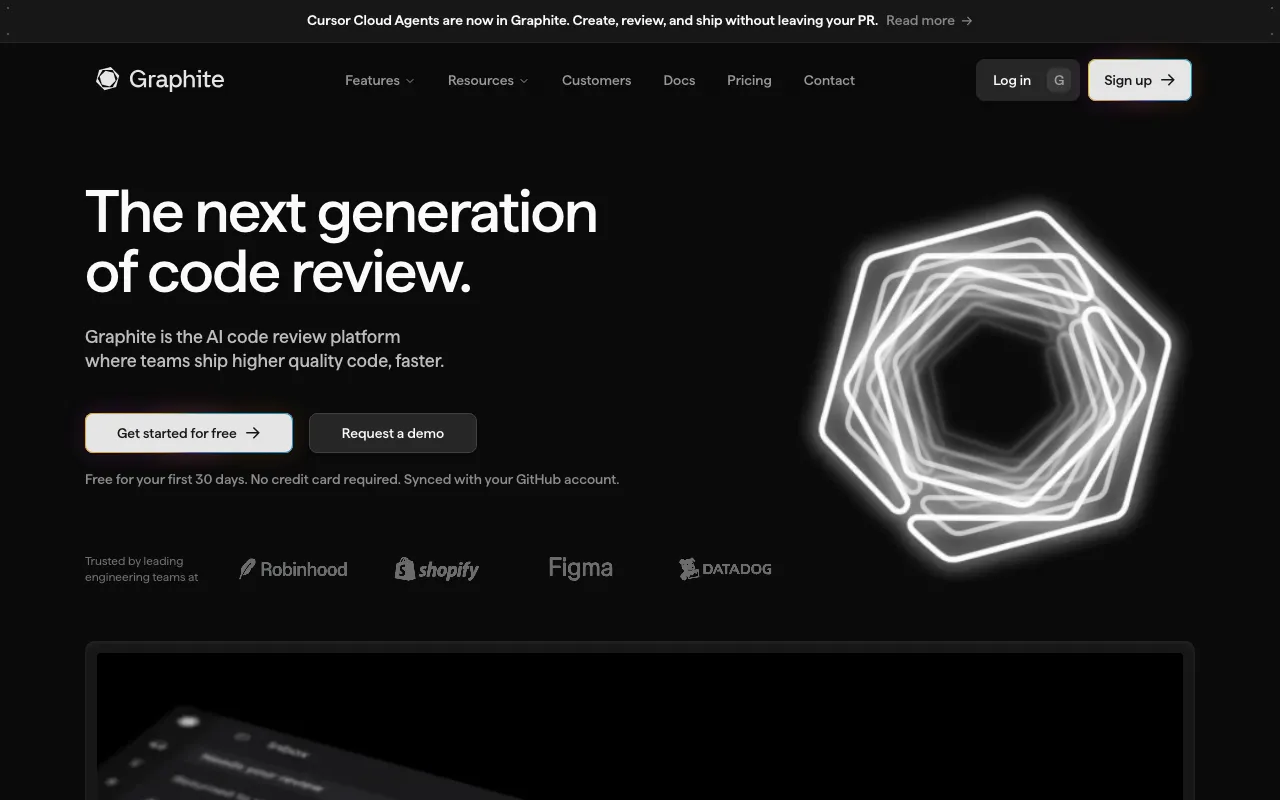
AI code review platform with stacked pull requests and a merge queue for GitHub, powered by the Graphite Agent (formerly Diamond) reviewer
Every tool in this list has a full profile in our directory with pricing verified against its official pricing page on the date shown on its stamp. Ranking reflects verified pricing, free-tier generosity, platform coverage, and documented capabilities — not sponsorships. Nobody can pay to appear here. Read the full methodology.
Yes — 6 of the 6 tools here have a free tier: Composio, Zapier, Activepieces, UIZZE, Pieces, Graphite. Pricing verified Jul 30, 2026.
UIZZE has the lowest verified monthly starting price in this list at $9/mo, checked against its official pricing page on Jul 30, 2026.
4 of the 6 tools list an API: Composio, Zapier, Activepieces, UIZZE.